
This is another case of a liberty, this time a royal one, claimed as a sanctuary. In 1493, coroner’s inquest jurors found that John Boteler, a bowyer of Lincoln, had stabbed and killed William Thomas. After the incident, the jurors reported, Boteler fled for the murder to “the franchise of Beaumontrent.” I’ve tentatively identified thisContinue reading “Sanctuary at a deer park?”
Author Archives: shannonmcsheffrey
Pleading sanctuary at King’s Bench

Another sanctuary breach case: in 1493, Richard Crokker and John Parker appeared at the bar at King’s Bench and were asked why they should be acquitted on felony charges. Crokker responded that on 9 February 1493 he entered the church of St Anne Aldersgate, London, and sought sanctuary there for several felonies. But while heContinue reading “Pleading sanctuary at King’s Bench”
Struck by a Scottish axe

Betrayal from within the household in 15th century Newcastle: in August 1493, Robert Grene of South Shields was in Newcastle, “in a lane called the Close” (down by the Tyne), when Robert Nicholson attacked him. Nicholson, from Winlaton on the other side of Newcastle, had been part of Grene’s own household in South Shields untilContinue reading “Struck by a Scottish axe”
Treason and sanctuary: the case of Thomas Bagnall
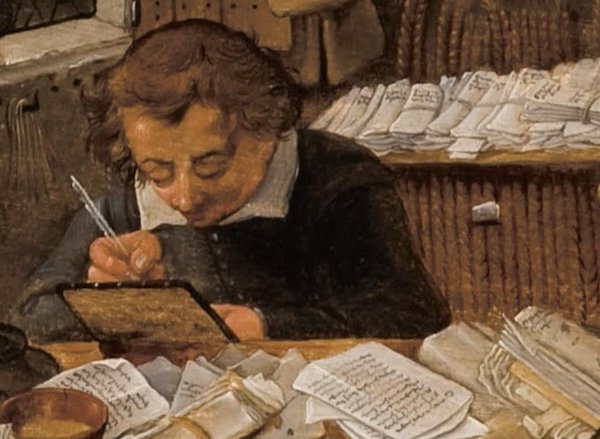
The 1495 claim of sanctuary made by Thomas Bagnall, traitor, supporter of Perkin Warbeck, thorn in the side of Henry VII, is one of the most famous sanctuary cases of the Tudor period. I also think it’s been misinterpreted. In 1495 five men—Thomas Bagnall, John Heth, John Skotte, John Kenyngton, and Alexander Synger—were accused ofContinue reading “Treason and sanctuary: the case of Thomas Bagnall”
The Widow’s appeal of homicide

In 1496 a woman launched a “widow’s appeal”: that is, a private prosecution of homicide undertaken by the dead man’s wife against the accused murderer. This one has a sanctuary angle because the alleged murderer took shelter in a Hospitaller property. Margery Rollesley, widow of Humphrey Rollesley, accused William Toft, a tailor of Denby, Derbyshire,Continue reading “The Widow’s appeal of homicide”
Police brutality, 1490s style

Cases from the 1490s show clearly that one thing that really bothered London sheriffs and their underlings was the escape of felons from their custody into nearby churches. Frustrated the H-E-double-hockey-sticks out of them. In 1495 John Calcott was in Newgate prison awaiting trial on felony when he managed to break out and run toContinue reading “Police brutality, 1490s style”
Reasonable and unreasonable force

Two Yorkshire brothers—one a law-enforcement officer—fled to the sanctuary at Durham Cathedral when an arrest went wrong. Then, as now, the line between allowable and unreasonable force in arrests was controversial. In May 1495, Christopher Easby of Ripon took along his brother William when he went to arrest John Dixson for an unspecified offence. DixsonContinue reading “Reasonable and unreasonable force”
Richard Arnold, sanctuary-seeker

London haberdasher Richard Arnold is most famous for his commonplace book, where he recorded a bunch of random and fascinating things, including (as this 19th century edition headlined) the ballad “The Nutbrown Maid.” He also took sanctuary at one point for debt. Amongst the entries in his book, Arnold includes (pp 123-4) a draft ofContinue reading “Richard Arnold, sanctuary-seeker”
Sanctuary at St Augustine’s monastery, Bristol

This case reveals some legal shenanigans on the part of the City of Bristol, which in the 1490s had a bee in its bonnet about St Augustine’s monastery just outside the City boundaries. Two indictments in the Bristol peace sessions in spring 1496 accused William Robynson, a yeoman of “Alyngton,” Dorset, of theft—he allegedly stoleContinue reading “Sanctuary at St Augustine’s monastery, Bristol”
Dominic Arthur and St Augustine’s, Bristol
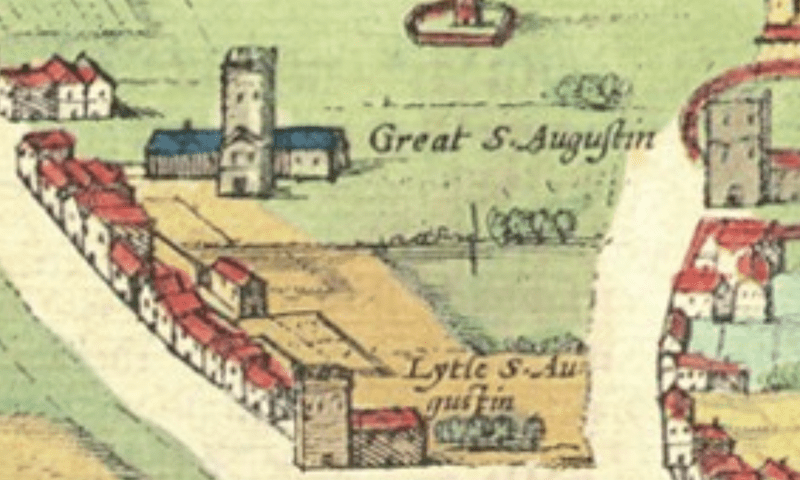
In 1496, seven men submitted a petition to the chancellor complaining that City of Bristol officials had arrested them within the sanctuary precinct of St Augustine’s monastery, just outside the civic bounds. When I first dug into this case, a striking thing emerged: though this and one other case are the only I’ve found inContinue reading “Dominic Arthur and St Augustine’s, Bristol”
 Sanctuary Seekers in England, 1394-1557