
On 22 July 1464 William Hogeson of Fulford, Yorkshire sought sanctuary at Durham Cathedral. Before the constable of Durham, cathedral clergy, and others, he confessed that “in defence of his body” he had killed John Staynton also of Fulford. He sought and was granted “the immunity and liberty of St. Cuthbert,” the patron saint ofContinue reading “Durham as a royally-chartered sanctuary”
Category Archives: Uncategorized
Benefit of clergy: another escape from the noose
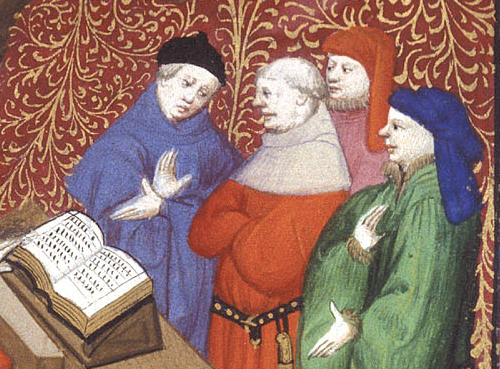
On 30 December 1465, yeoman John Wynterbourne of Aldbourne Wiltshire took the church of Chipping Lambourne in Berkshire. He confessed to the coroner that on 6 June of that year he had murdered fisherman John Parker in Oxfordshire, near the Thames. After Wynterbourne killed Parker, he dragged his body to the river and threw itContinue reading “Benefit of clergy: another escape from the noose”
Sanctuary for sexual assault
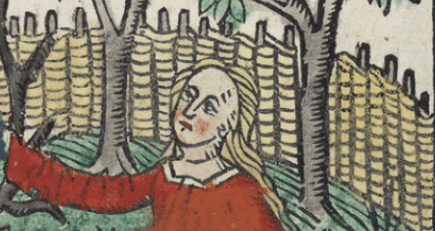
On 12 March 1467, John Beauchamp of Lympstone, Devon, took sanctuary at St. Paul’s cathedral in London because eight years before he had assaulted, raped, and “deflowered” singlewoman Alice Perow with a knife. By the way, although in some circumstances in the 15th century (as Ruth Mazo Karras has shown), “singlewoman” came to be usedContinue reading “Sanctuary for sexual assault”
Murder with a turf spade

On 12 June 1467, William Laydman of Bowes sought sanctuary at Durham Cathedral. He confessed that nine days before at Moss Sike Head he had mortally wounded John Williamson, also of Bowes, with a turf spade. He said that he did this “against his will and in defence of his body,” a frequent refrain inContinue reading “Murder with a turf spade”
Thiefcatchers and felonious priests
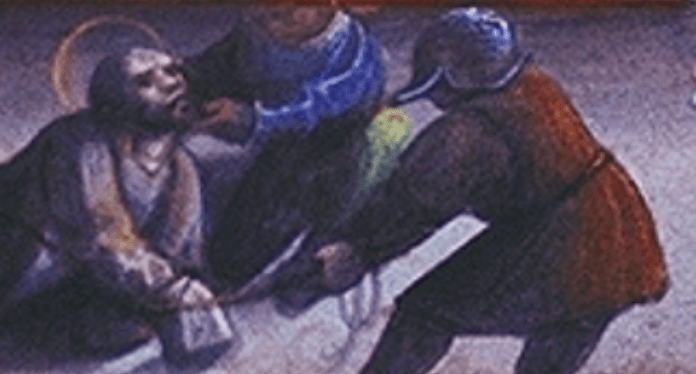
One day John Kirkeham, a London “catchpoll” (thief-catcher) arrested Geoffrey Warmyngton, “vicar of St Martin’s,” for an unspecified offence. Warmyngton twisted out of Kirkeham’s grasp and ran to St Martin le Grand for sanctuary. It’s unclear which church dedicated to St Martin was Warmyngton’s place of employment, as there were six churches dedicated to StContinue reading “Thiefcatchers and felonious priests”
The failed sanctuary at Paris Garden
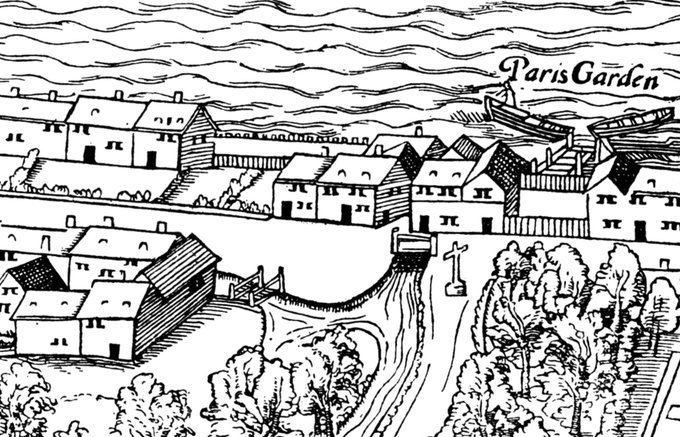
Here, a more or less failed sanctuary — some caught on, some didn’t. On 1 May 1468, Thomas Huntley paid 6d to be admitted to sanctuary in the manor of Paris Garden located on the south bank of the Thames, now at the foot of Blackfriars Bridge. The manor of Paris Garden belonged to theContinue reading “The failed sanctuary at Paris Garden”
“I ly in seintwarye at grete coste”: Scribe William Ebesham in sanctuary

In 1468 or 1469 scribe William Ebesham wrote one of his most important clients, Sir John Paston, to ask him for money, for as “God knoweth, I lie in sanctuary at great cost and amongst right unreasonable askers.” Between about 1460 and 1500, layman Ebesham made a career as a scribe, especially as a copierContinue reading ““I ly in seintwarye at grete coste”: Scribe William Ebesham in sanctuary”
Sanctuary and regime change in the Wars of the Roses: The Readeption, 1470 (pt. 2)
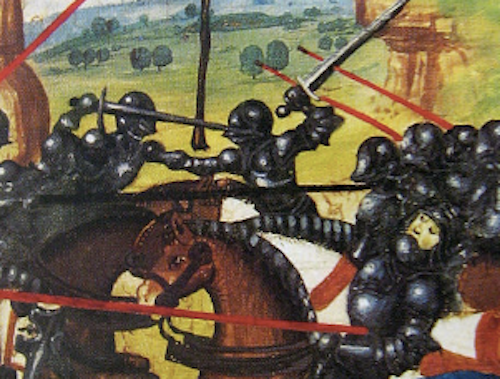
The War of the Roses was a major factor in the figuring of chartered sanctuaries as refuges from tyranny and arbitrary rule, because at each regime change the losing side ran to sanctuary. Many others joined Queen Elizabeth Woodville in the sanctuaries when Henry VI regained the throne (the “Readeption”). One was Yorkist supporter WilliamContinue reading “Sanctuary and regime change in the Wars of the Roses: The Readeption, 1470 (pt. 2)”
Sanctuary and regime change in the Wars of the Roses: The Readeption, 1470 (pt. 1)

The first major episode of sanctuary seeking in the mid-fifteenth-century civil wars came with the Readeption: the overthrow (temporary as it turned out) of Edward IV, which brought with it the flight of his queen and children to refuge in Westminster Abbey. Henry VI had been deposed in 1461 by Edward IV, but not killed;Continue reading “Sanctuary and regime change in the Wars of the Roses: The Readeption, 1470 (pt. 1)”
Jaquetta of Luxembourg

When Queen Elizabeth, wife of Edward IV, took sanctuary with her children in October 1470, her mother, Jaquetta of Luxembourg, dowager duchess of Bedford, went along with her, according to John Paston III. “The queen that was,” he wrote his mother, “and the duchess of Bedford be in Seyntuary at Westmestyr.” Jaquetta had an interestingContinue reading “Jaquetta of Luxembourg”
 Sanctuary Seekers in England, 1394-1557