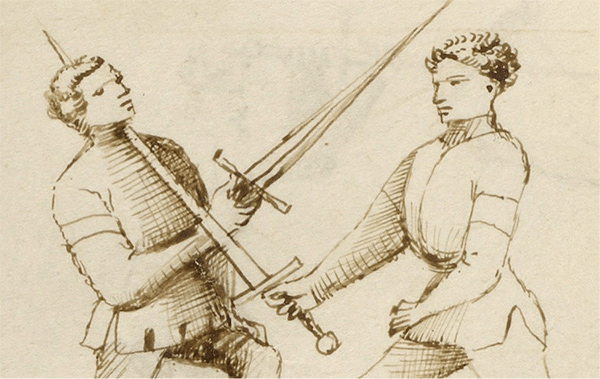
On 14 April 1474 William Forster alias William Launder sought sanctuary in the church of St Clement Danes, west of London. The coroner’s memo of the abjuration is unusual: it was written in the first person, from the point of view of the abjurer. Forster identified himself as a yeoman of London but also ofContinue reading “Welsh swords for hire”
Category Archives: Uncategorized
Felonious priests and benefit of clergy

On 3 September 1475, a chaplain named Richard Parenet of Warwickshire took sanctuary at St Augustine’s priory in Daventry, Northants. He confessed to the coroner that 16 years before he had committed murder. Together with two yeomen of Lincolnshire, in 1459 he had assaulted William Saunderson of Gainsborough, Lincolnshire, in Gainsborough, with a bastard (orContinue reading “Felonious priests and benefit of clergy”
Sanctuary-seeking and the residents of St Martin le Grand
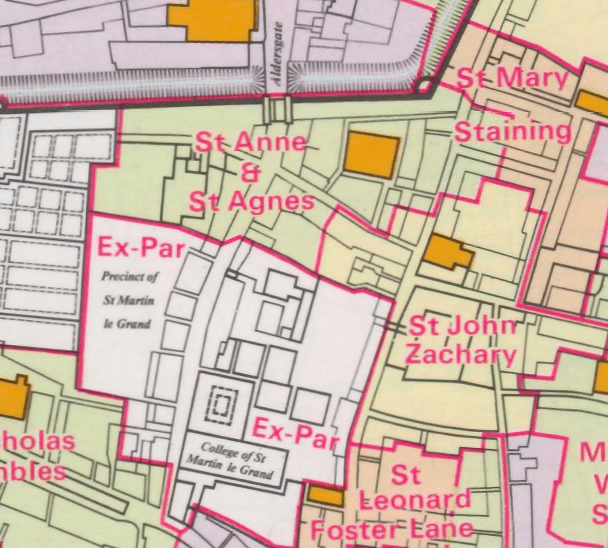
On February 8, 1476, a coroner’s inquest jury in the parish of St Anne Aldersgate over the body of a London yeoman, William Duglas, reported that pewterer John Walker had murdered him. Jurors said that Duglas had been walking in God’s peace and the king’s about 3 P.M. when Walker suddenly attacked him with aContinue reading “Sanctuary-seeking and the residents of St Martin le Grand”
Murder with a staff in East Smithfield
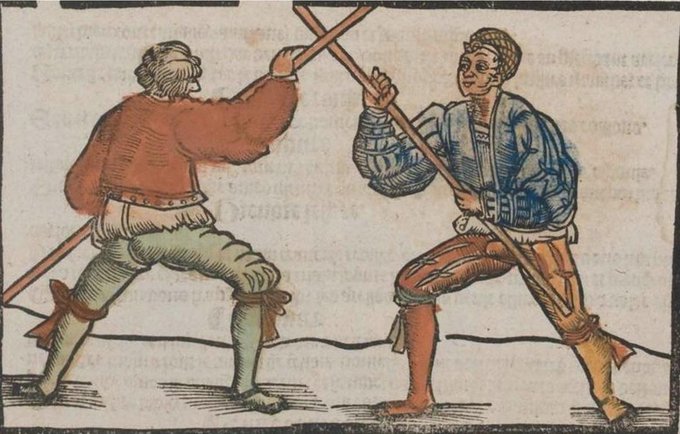
In October 1475, John Gogh, yeoman of Theydon Garnon, Essex, attacked William Chadworth the younger, esquire, at East Smithfield outside London – he hit him on the head with a staff. Chadworth died from his wound early in the new year and, according to the indictment, Gogh then fled (on the feast of the Epiphany,Continue reading “Murder with a staff in East Smithfield”
A typical Durham sanctuary seeker

In the later 1470s, records for sanctuary seekers at Durham Cathedral become more frequent, coinciding with an uptick in sanctuary-seeking throughout the kingdom. Christopher Holme was relatively typical of Durham’s seekers. Christopher Holme confessed to the cathedral official on 4 June 1477 that six weeks before, he’d been in company with Henry Stobbes and HumphreyContinue reading “A typical Durham sanctuary seeker”
Child killed in accidental death

One October day in 1459, Thomas Carter was riding his horse in the town of Leyburn, in Coverdale, Yorkshire, carrying his three year old son in front of him, when Christopher Brown attacked him. Carter quickly dismounted from his horse to defend himself, but in so doing he accidentally knocked his son off the horseContinue reading “Child killed in accidental death”
Gamblers and cheaters

In 1477 François Narbone of Gascony lured Bernard, servant and kinsman of Diego de Castro, a Spanish merchant, into a London tavern; there by “false and subtle means” he cheated Bernard of £28 by playing with a loaded set of dice. Diego, enraged, had François arrested by London officials “to have him punished according toContinue reading “Gamblers and cheaters”
Beverly, a sanctuary town

In July 2019, I visited Beverley for the first time: I was impressed to see the sanctuary town, including the purported “frith stool” in Beverley Minster. Alas, sanctuary seekers probably didn’t use this seat; but though our guide told me that tales of sanctuary at Beverley were invented by fanciful Victorian antiquarians, we do indeedContinue reading “Beverly, a sanctuary town”
To Murder a Monk

Another early entry in the Beverley sanctuary register is for John Boys, who interestingly was from Durham – he travelled about 150 km from the perfectly good sanctuary in his own home town to enter Beverley sanctuary on 24 May 1478. Maybe he decided to go to Beverley because he committed what we might imagineContinue reading “To Murder a Monk”
Getting away with murder

On 20 February 1478, gentleman George Gray of London took sanctuary at the parish church of All Saints, Marsworth, Buckinghamshire. Gray confessed to the coroner that more than a year before he had killed one John Skynner with his dagger in the parish of St Martin in the Fields – which was, indeed, then inContinue reading “Getting away with murder”
 Sanctuary Seekers in England, 1394-1557