
In 1534 a gunner and gunpowder maker from Cappadocia in the Ottoman Empire got into a quarrel with a beer brewer, himself probably also an immigrant to England. The brewer ended up dead. The gunner’s name was hard to render into English, so he was listed by a number of aliases in the indictment: LucasContinue reading “The Cappadocian gunner”
Category Archives: Uncategorized
Dirty deeds, done dirt cheap: Humphrey Eye runs to Bewdley

Violence was a vital tool for male aristocrats in the reign of Henry VIII; presumably not all gentlemen and noblemen assassinated their enemies at the drop of a hat, but the records of criminal prosecution show that some not only did so but did it with impunity. Much of the time the high-status men whoContinue reading “Dirty deeds, done dirt cheap: Humphrey Eye runs to Bewdley”
A pesky bit of youthful murder
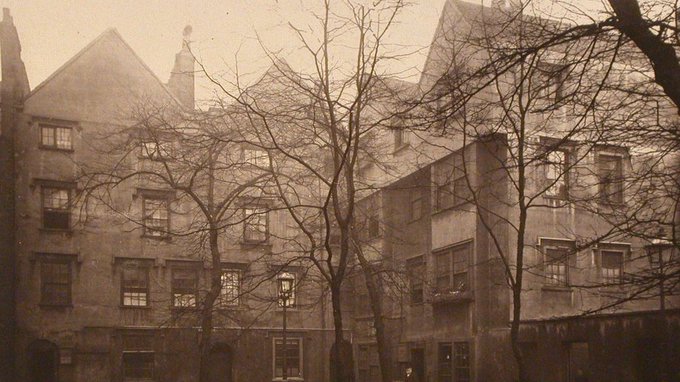
One October afternoon in 1534, two lawyers fell into a quarrel. Both were at Barnard’s Inn (one of the “law inns,” where common lawyers received their training), and they may have been students. John Margettes, an Irishman, mortally wounded John Yaxley, stabbing him in the stomach. Margettes immediately fled to Westminster Abbey. This allowed himContinue reading “A pesky bit of youthful murder”
The death of Geoffrey Jones, member of the king’s household
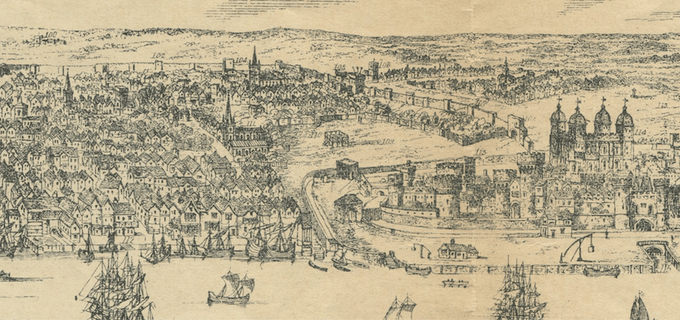
Aristocratic retainers and servants weren’t part of the civic political community in London, but they often lived there, certainly walked its streets, and killed one another there from time to time. On 7 March 1536 around 8pm, Geoffrey Jones, yeoman, was found dead in Tower Street on the east side of the City of London.Continue reading “The death of Geoffrey Jones, member of the king’s household”
Hugh Harvey and the sanctuary town of Knowle
Hugh Harvey worked as a servant at The Goat Inn on the Strand near London. One day in 1537 he robbed a guest, royal chaplain Dr Richard Croke, of a bag of money and then scampered off to sanctuary. Rather than running to nearby Westminster Abbey, though, Harvey made his way westward towards Warwickshire, whichContinue reading “Hugh Harvey and the sanctuary town of Knowle”
Sanctuary in the age of uncertainty: Beaulieu c1537

Although in many ways sanctuary was just continuing along as normal in the second half of the 1530s, not surprisingly the ongoing monastic dissolutions, which had begun in 1536, were raising issues. As of 1537, none of the religious houses with attached sanctuaries had been shut down, but at the very least there was uncertaintyContinue reading “Sanctuary in the age of uncertainty: Beaulieu c1537”
Gentry feuds, highway robbery, mistaken identity

In 1537, yeoman Thomas Foteman was among thirty-one men accused in the death of William Jackson in Gloucestershire. Foteman was a retainer of Sir John Brydges, later 1st Baron Chandos, career soldier and man of “intense personality,” as his ODNB biographer put it. Brydges was evidently feuding with another aristocrat, Sir John Huddleston, who’d hadContinue reading “Gentry feuds, highway robbery, mistaken identity”
William Webbe and his wench

In September 1537 a rumour circulating through the Westminster sanctuary touching the king’s honour came to Thomas Cromwell’s ears. It was a scurrilous and maybe even treasonous piece of gossip that spread around the sanctuary men at Westminster, about the keeper of the sanctuary, the keeper’s “wench,” and the king. Cromwell established an informal enquiryContinue reading “William Webbe and his wench”
Quarrel with a “master of fence”

One day in early spring 1538, gentleman Edward Wolff was in the precinct of St Martin le Grand visiting the shop of a goldsmith. Wolff was servant to Edward Seymour, earl of Hertford and brother of the recently deceased Queen Jane. St Martin’s was home to a number of alien (immigrant) goldsmiths, whose work wasContinue reading “Quarrel with a “master of fence””
Flight of an apprentice
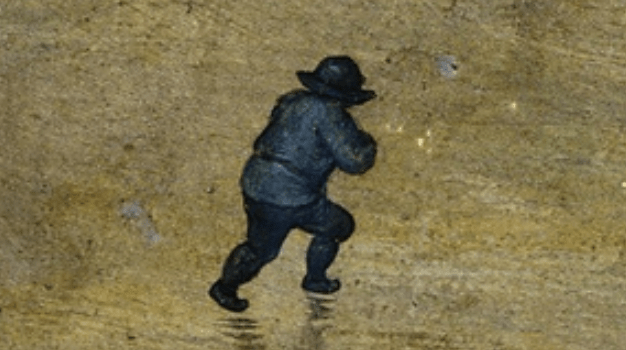
In 1538 London apprentice Michael Crowche ran to Westminster sanctuary for fear of his master’s “crueltie of imprisonment.” As he put it, he “did flee and took the sanctuary of Westminster …for the safeguard of his body, until such time as that [he] might avoid the cruelty and extremity of the wilfulness & malice ofContinue reading “Flight of an apprentice”
 Sanctuary Seekers in England, 1394-1557