
Cheshire was a hotbed of violent gentry rivalries. The violence wasn’t confined to Cheshire itself: in 1539, two killings occurred in the shadow of St Paul’s Cathedral in London. The first: on 10 February 1539, a coroner’s inquest was held over the body of gentleman Richard Cholmeley of Cheshire, who lay “feloniously murdered” near StContinue reading “Cheshire feuds”
Category Archives: Uncategorized
Death of a Spanish merchant
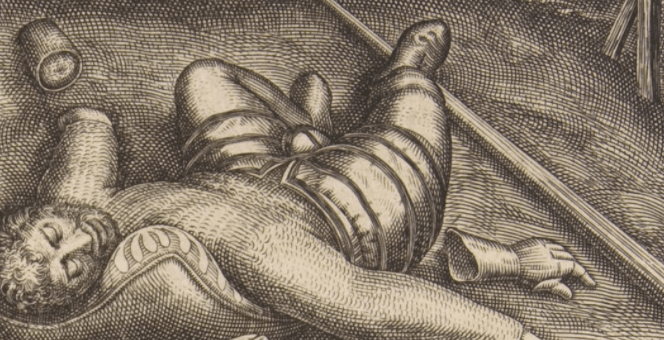
On 15 July 1539, a Spanish merchant named John de Ordonna was found dead in the courtyard of another Spanish merchant, Fernando de Verdesey, in London. A coroner’s inquest was convened to investigate the cause of his death. The inquest jurors determined that Ordonna had been killed by the servant of Alvarowe de Astudelio, anotherContinue reading “Death of a Spanish merchant”
Rubbing Cromwell the wrong way

This sanctuary seeker seems to have been another felon who rubbed Cromwell the wrong way, and was not fortunate enough to successfully use Westminster’s asylum to gain time to organize a pardon. In February 1539 a London yeoman named George Brewce was tried for burglary in Colchester. He claimed benefit of clergy in an attemptContinue reading “Rubbing Cromwell the wrong way”
Lucky man

In some 1539 cases, sanctuary seekers seized from church precincts on Thomas Cromwell’s orders had unhappy endings. Anthony Spencer was also unceremoniously grabbed from the Westminster sanctuary late that year, but the conclusion of his case was quite different. In mid-October 1539, Spencer, a “yeoman of London,” robbed and murdered one John Morres in Surrey.Continue reading “Lucky man”
Just in time

Today a quite ordinary sanctuary seeker, whose case is interesting because he’s one of the last to use the old system before it changed mid-1540: he snuck under the wire. The story of John Porter, a labourer of Fewston, Yorkshire, had begun much earlier, in 1528. In that year Porter had been at Lancaster (someContinue reading “Just in time”
Off on a technicality

Something a bit funny happened with this case. A man committed murder but got off on a completely fictitious technicality. (He also took sanctuary, though that’s probably incidental to the fixing of his case.) In March 1541, Robert Whitfield, yeoman of Southwark, assaulted and killed another yeoman, Nicholas Grene of London. Afterwards, Whitfield fled toContinue reading “Off on a technicality”
Government incompetence and the new sanctuary towns of the 1540s

In July 1540, a statute (32 Hen VIII c 12) shut down chartered sanctuaries in monasteries and mandated a new secular sanctuary system. There was only one problem with the new system: it didn’t work. It’s very hard to believe in 2020 that governments could put into place policies that just don’t work: our governmentsContinue reading “Government incompetence and the new sanctuary towns of the 1540s”
A horse thief uses the new sanctuary system, 1541

The first example I’ve found of a sanctuary seeker explicitly using the new system mandated by the 1540 statute was William Cripps, a fisher from Rye, Sussex. He took sanctuary after stealing a horse at Stratton Audeley, Oxon, in June 1541. Cripps had made his way to Bledlow, Buckinghamshire, presumably on the stolen horse, whenContinue reading “A horse thief uses the new sanctuary system, 1541”
Seeking sanctuary after 1540

Only about six* records survive of men seeking sanctuary under the new post-1540 system; of those, Westminster remained the most popular choice – three of six went there. One was a labourer from Cambridge, Robert Mere. He’d stolen a grey horse in the university town, but something evidently went wrong with his getaway plan asContinue reading “Seeking sanctuary after 1540”
Wells as a sanctuary town
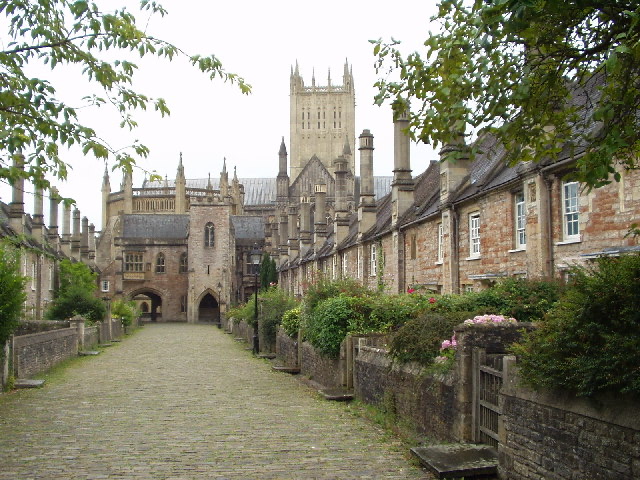
Though eight towns were designated as sanctuary cities by the 1540 Sanctuaries Act, we only have evidence for seekers going to Westminster, Norwich, and Wells. The latter cathedral town in Somerset was the destination for a weaver from Milson, Shropshire named William Arthur, who ran into the cemetery of the church at Culmington, Shropshire inContinue reading “Wells as a sanctuary town”
 Sanctuary Seekers in England, 1394-1557