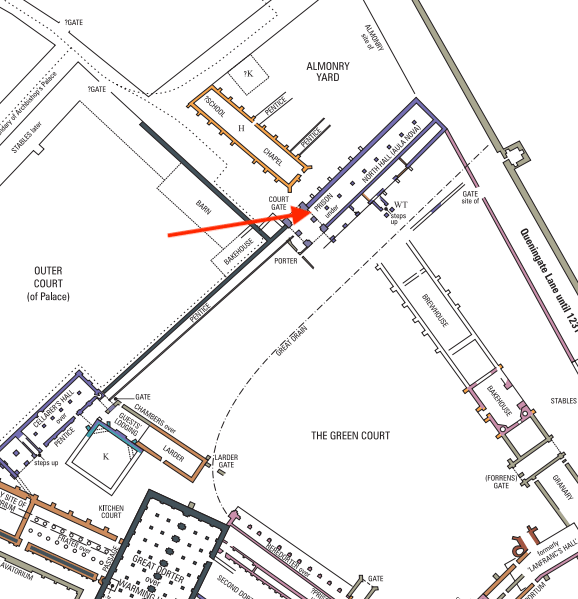
In March 1418, Peter Hughebard, labourer of Woodchurch, Kent, was arrested for theft and put into the prison of Christchurch cathedral priory in Canterbury (presumably because he had been arrested within the liberty of the priory). Though we don’t usually think about churches as needing prisons, English bishops and other ecclesiastical leaders often acted asContinue reading “Escape from the bishop’s prison”
Category Archives: Uncategorized
Overstaying your welcome

On 14 May 1418, a husbandman of Aswardby, Lincolnshire, Thomas Laddesnam, was arrested for theft by the local constable, who then handed him over to Andrew Fetys of Pinchbeck, bailiff for the area. Fetys’s job was to convey Laddesnam the 30 miles from Aswardby to Lincoln castle to await trial. But Laddesnam escaped Fetys’s custodyContinue reading “Overstaying your welcome”
Escape from the Marshalsea prison

On 12 July 1418, Thomas Corbet, gentleman of London, was in the Marshalsea prison, incarcerated there to force him to answer to a trespass suit launched by one Matthew Preston. A Lombard named Alexander Jon (Alessandro Gianni?) “fraudulently machinated” so that Corbet was able to escape from the Marshalsea and flee to sanctuary at Westminster.Continue reading “Escape from the Marshalsea prison”
The multiple mitigation man

Some medieval felons used every escape hatch — also known as mitigations — available to them. Often they started with sanctuary. In a 1423 case, the sanctuary seeker moved on to grassing up his mates before claiming the benefit of clergy. Third time was the charm. In April 1423, John Digelot, a yeoman of HolmburyContinue reading “The multiple mitigation man”
Buying wine on credit
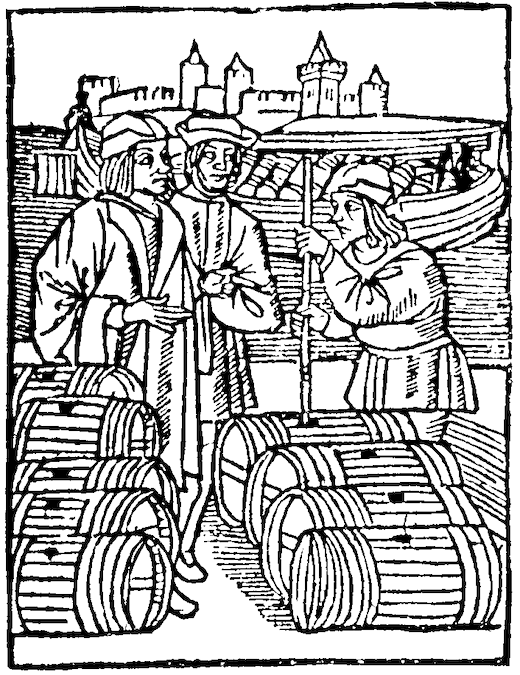
In 1423 a merchant from Lombardy named Nicholas Martin (Niccolo Martini?) wanted to buy fourteen casks of red wine, at the very considerable cost of £46, from a London vintner named William Fromond. Fromond was reluctant to contract with a stranger who had no property in London to act as collateral for payment, but aContinue reading “Buying wine on credit”
An Irish scholar makes bad choices
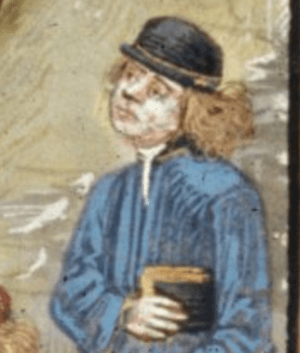
On 1 December 1424, John Hore or Hurne of Ireland, identified as a “scholar,” took sanctuary in the parish church at Beaconsfield, Buckinghamshire. Two things about Hore’s identity – being Irish, being a scholar – make his case intriguing. Several days after Hore took church at Beaconsfield, the coroner came and Hore confessed that heContinue reading “An Irish scholar makes bad choices”
Seeking sanctuary for debt
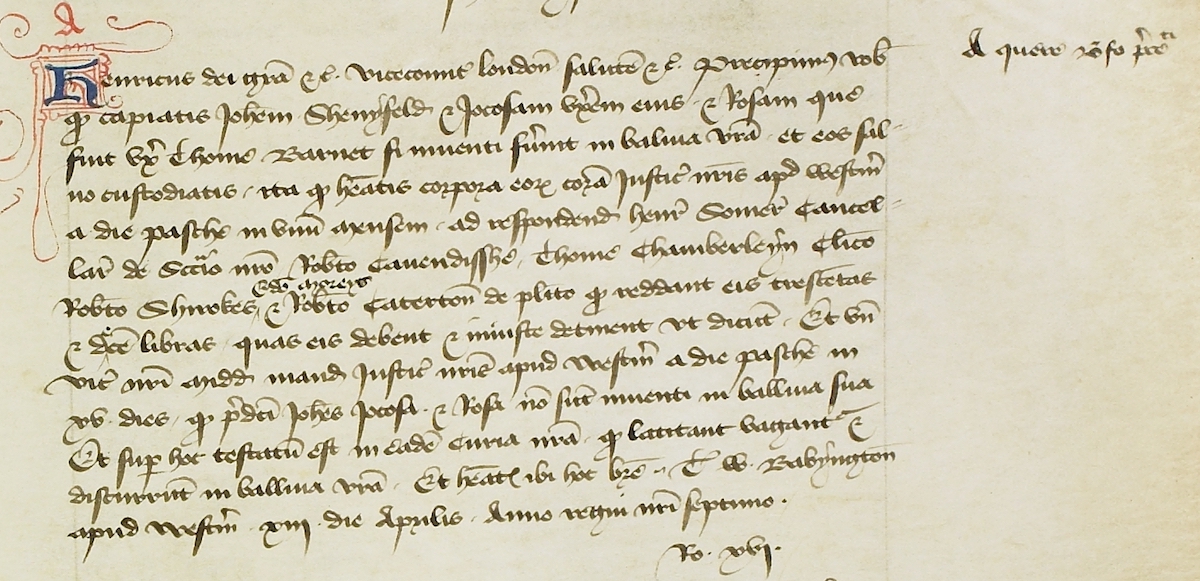
In 1429 three Londoners – John and Joyce Shenyfeld, and Rose Barnet, widow – were jointly sued in the court of Common Pleas for a debt of £310 (a very substantial amount of money), which seems to have been attached to the probate of the estate of Barnet’s late husband. When they failed to appearContinue reading “Seeking sanctuary for debt”
Serial sanctuary seeker runs out of luck

Some people took sanctuary more than once — but in this case, the double sanctuary-seeker still ended up on the gallows. In 1425, John Holand, a shoemaker from Stone, Staffordshire, took sanctuary at the parish church in Hackney. He told the coroner that he, together with two soldiers and a horse-dealer, had murdered a LondonContinue reading “Serial sanctuary seeker runs out of luck”
Apprentices left to fend for themselves

Twice in 1425, apprentices came forward to the London authorities to ask to be released from their apprenticeship contracts with masters who had gone into sanctuary for debt at St. Martin le Grand without leaving any provision for their trainees. Laurence Smith asked to be freed from his obligations to the grocer Thomas Mason, andContinue reading “Apprentices left to fend for themselves”
Angry townspeople vs. cathedral clergy
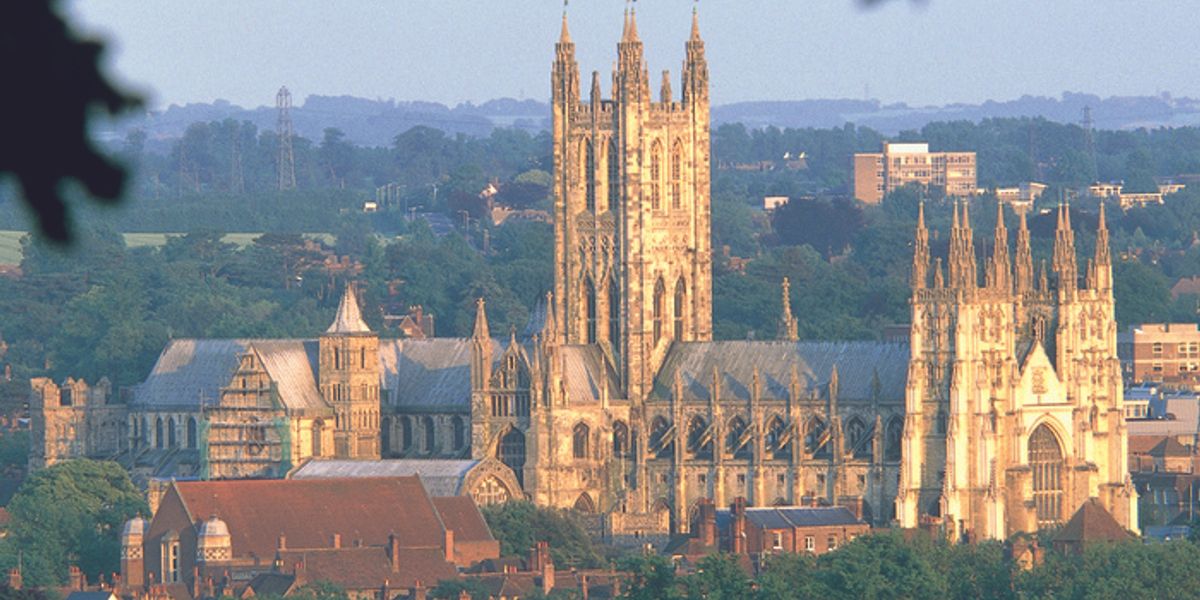
In 1425, the bailiffs and citizens of Canterbury drew up a list of complaints against the prior of Canterbury cathedral; one grievance was that the prior refused to hand over to them a goldsmith “from across the seas” named Bernard Oswyck, who had taken sanctuary in the priory precinct. The early historian of English sanctuaryContinue reading “Angry townspeople vs. cathedral clergy”
 Sanctuary Seekers in England, 1394-1557