
On 27 May 1429 at Whitechapel, Ivo Caret of Brittany murdered his employer, the widow Joan Wynkfeld, and ran off with all her portable goods. Later chroniclers said that Wynkfeld, a wealthy woman, had taken Caret into her home and given him work as an act of charity. This magnanimity was well-intentioned but ill-placed, forContinue reading “Domestic homicide, espionage, and women’s vigilante justice”
Category Archives: Uncategorized
Ex-soldiers and violence in the 1430s

Around 1431, an argument broke out on an agricultural estate just outside Rochester in Kent. Two farm servants, thresher William Wynter and ostler William Pope, quarrelled over a belt decorated with silver. Wynter was an ex-soldier, a veteran presumably of the French wars (there are various William Wynters, archer, in http://medievalsoldier.org) and perhaps Pope, too,Continue reading “Ex-soldiers and violence in the 1430s”
Immigrants and judicial exile
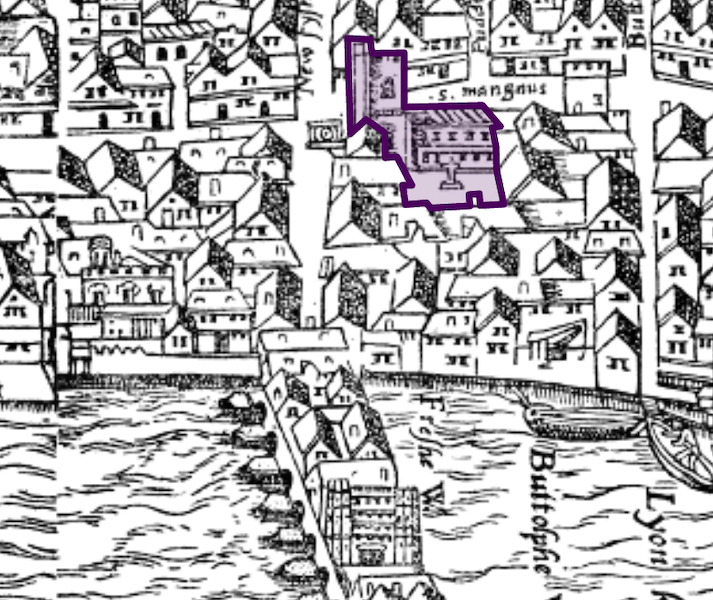
On 17 March 1432, a Dutch scrivener, Bartholomew Bertram – alias John Clerk, alias John Bartram – took sanctuary in St. Magnus’s church (one of medieval London’s largest churches, near London bridge). Bertram confessed to the coroner that he had broken into a London pointmaker’s shop in 1428 and then he abjured the realm; theContinue reading “Immigrants and judicial exile”
A quarrel between two priests

On 19 November 1435, a London chaplain, William Burght, was found dead in the parish of St. Gregory, right by (attached to, really) St. Paul’s cathedral. The coroner’s inquest jurors reported that Thomas Curteys, parson of Shere, in Surrey, had lain in wait to kill Burght, brutally stabbing him many times with a “trencherknife” –Continue reading “A quarrel between two priests”
The evil sheriff Leoffstan

An early English king, a woman seeking asylum, an evil sheriff, and an avenging fiend: these are all part of a story written by poet and monk John Lydgate to influence the impressionable young king Henry VI. In the later 1430s, John Lydgate, poet and monk of the abbey of St Edmunds, translated the lifeContinue reading “The evil sheriff Leoffstan”
Mercy and the young Henry VI
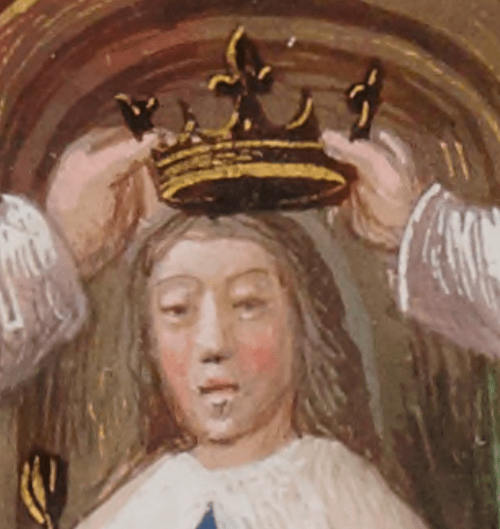
Henry VI (r. 1422-60; 1470-71) came to the throne as a baby; in the 1430s and into the early 1440s as he moved through his teens he gradually began to assume personal control of the royal government. A hallmark of the early years of his rule was his determination to govern in a Christian fashionContinue reading “Mercy and the young Henry VI”
No felony, no sanctuary

A curious aspect of medieval English sanctuary is that if you (blameless) were being chased by your foes (bad guys) and spotted the safe haven of a parish church, you could only take sanctuary there if you invented a felony. To receive the “protection of holy church” from pursuers sanctuary seekers had to be felonsContinue reading “No felony, no sanctuary”
Another fake confession

Another felony-inventer, this time to escape creditors. On 6 February 1438, Thomas Homnale, yeoman of Bury, fled to St Margaret, Southwark and confessed a two-year-old horse theft. He abjured, but nine months later he was found in the realm and taken into custody. At King’s Bench the justices asked him whether there was any reasonContinue reading “Another fake confession”
The curious case of the Welsh knight
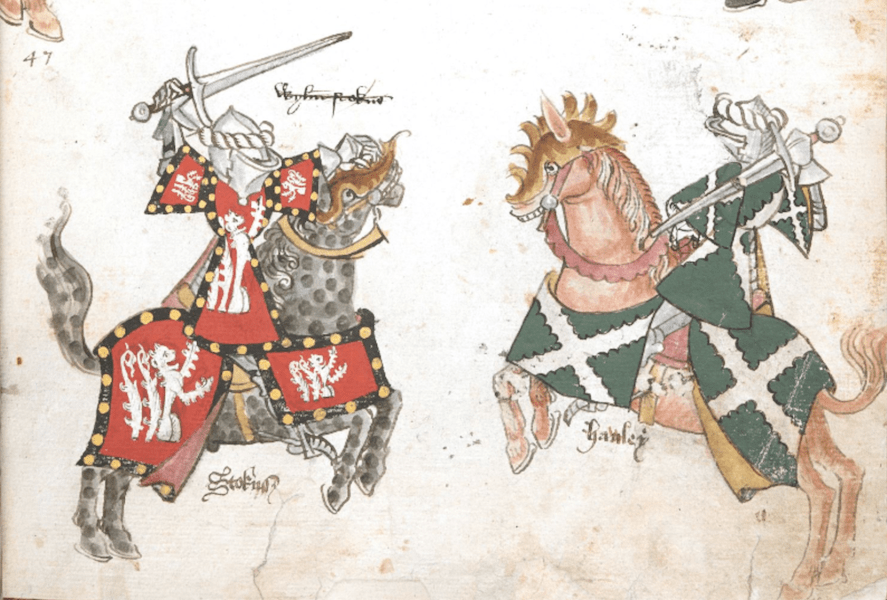
Another felony-inventor, this time a curious case of a Welsh knight who took sanctuary for an already-pardoned killing. His chequered career – including dabbling in Lollard revolts – suggests he was quite a guy. In London in 1431, Sir Nicholas Conway “of Caernarfon in parts of Wales,” recently returned from the war in France, killedContinue reading “The curious case of the Welsh knight”
An exile’s after-story
Here, a rare case where we know what an abjurer did when he went into exile across the Channel. On 4 June 1438, William Roper of Goudhurst, Kent, took sanctuary in the church at Marden after killing one John Sponle in what he described as self-defence. Presumably he thought the circumstance would not give himContinue reading “An exile’s after-story”
 Sanctuary Seekers in England, 1394-1557