
On 24 January 1444, William Porter, yeoman of Yorkshire, took sanctuary at the London Charterhouse for a breaking and entering at Barking nunnery, stealing a “great cross of gold” and other church plate. He abjured the realm through the port of Winchelsea. It’s ironic that he committed a theft in one religious house and thenContinue reading ““A great cross of gold”: Theft of religious objects”
Tag Archives: Abjuration
Felonious monk
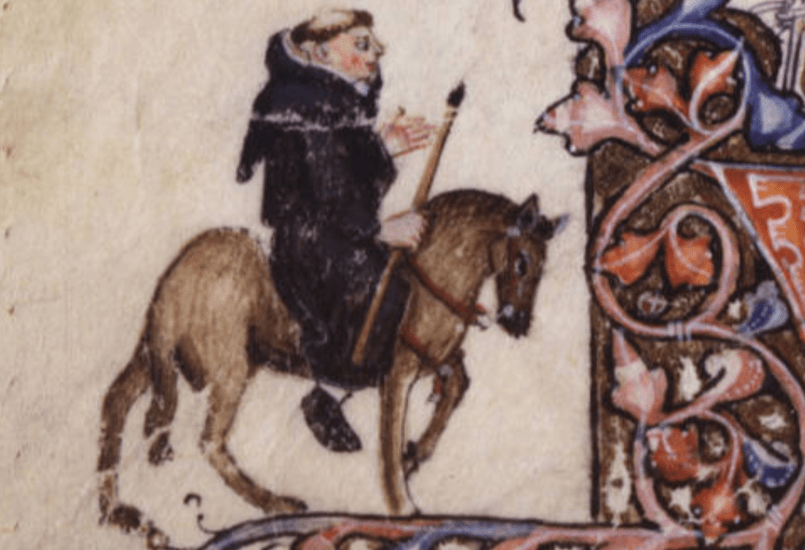
William Lane, a monk at Abingdon Abbey, fled to a church after having been indicted of horse theft. He abjured the realm, but did not actually leave; when he was caught and brought before the king’s justices, he then claimed benefit of clergy. He was delivered into the custody of the bishop of London, whoContinue reading “Felonious monk”
Murder-for-hire
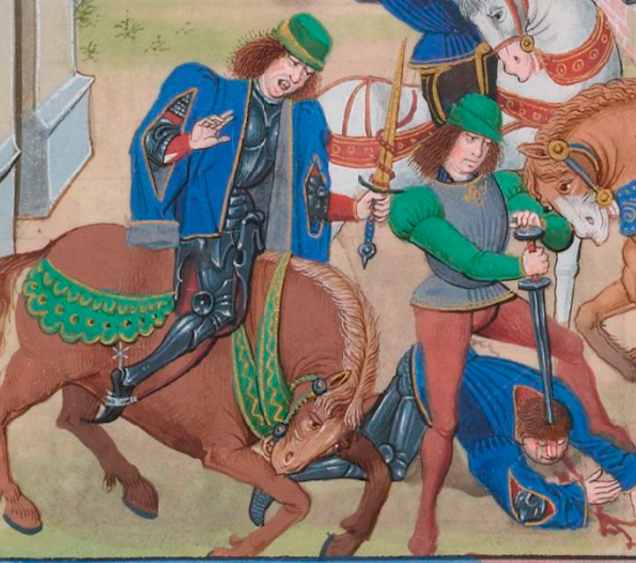
On 25 April 1446, three men of Geddington, Northamptonshire – two yeomen and a labourer – lay in wait to attack one William Shirwode. According to the indictment, the two yeomen attacked Shirwode with swords drawn, and the labourer, William Campyon, with a pitchfork. It was Campyon who struck the fatal blow, hitting Shirwode onContinue reading “Murder-for-hire”
Bagpipes and cheese: an unsuccessful burglary
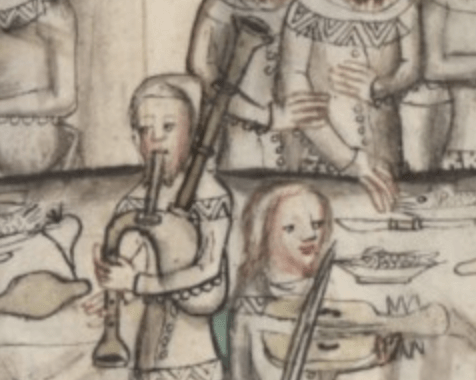
Who amongst us has not had the urge to steal a set of bagpipes and eight large cheeses? Basic party kit, as presumably John Esteneys, a weaver from Southwark, thought when he broke into two houses in Walton on Thames in 1451 to steal those items. The party apparently went wrong, however, and on 28Continue reading “Bagpipes and cheese: an unsuccessful burglary”
“The violence of the sea”: logistical problems of exile

Abjuring the realm – specifically the part about finding a ship to take overseas – was not always a straightforward affair. In late October 1452, labourer Thomas Kendale was indicted for murder and fled to the church in Norton, Hertfordshire, to escape arrest. He confessed the homicide to the coroner, abjured the realm, and madeContinue reading ““The violence of the sea”: logistical problems of exile”
Abjuration in the Channel Islands
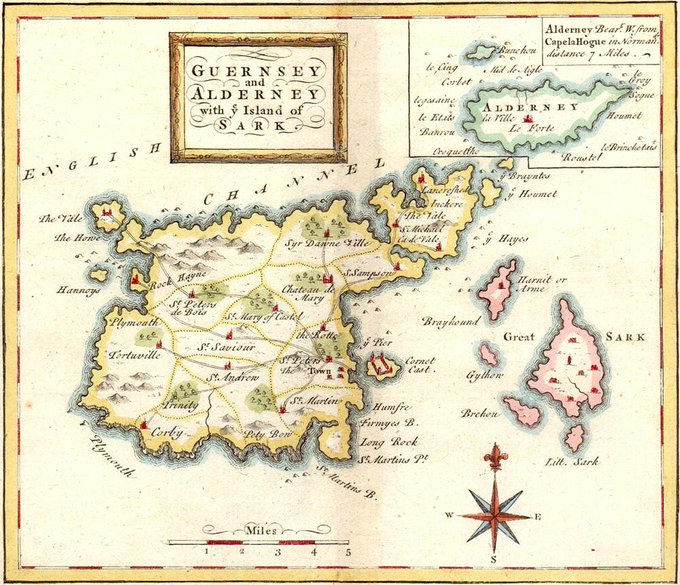
One day in the mid-1450s, as mariner John de Nermont of Guernsey later recounted, gentleman Simon le Cauf le younger came to him demanding money; John refused, and Simon attacked him. John responded in self-defence, killing Simon. John ran to sanctuary in St. Mary’s church in the king’s castle (Ste-Marie-de-Castel?), and there “he abjured theContinue reading “Abjuration in the Channel Islands”
False Confessions
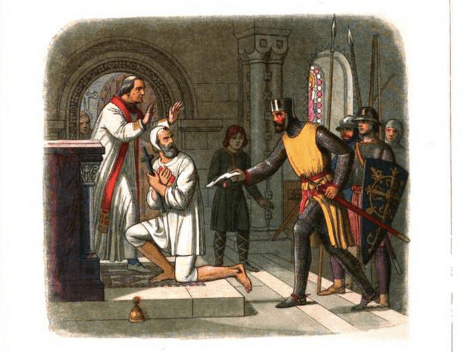
On 25 July 1457, Richard Grene of Lincolnshire was travelling on the king’s highway from the Louth fair when a stranger attacked him and threatened his life. He fled to a sanctuary, but his enemies appeared and tried to drag him out. To stop them, he called for the coroner, falsely confessed he’d been presentContinue reading “False Confessions”
Could a house serve as sanctuary? Hospitallers and asylum in the 15th century
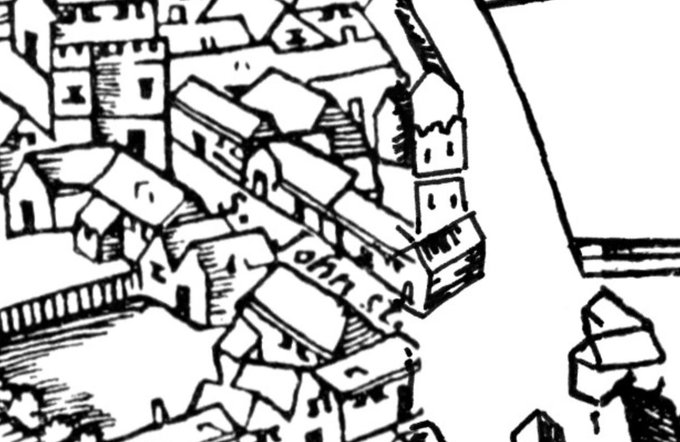
In 1461 a coroner’s inquest was held over the body of William Lyng, found dead in St John’s Street, which led into the priory of St John of Jerusalem, the Hospitaller Knights’ HQ in Clerkenwell. The inquest jurors ruled that Lyng was killed by Vincent Hall, baker and brewer of St John’s Street. Hall wasContinue reading “Could a house serve as sanctuary? Hospitallers and asylum in the 15th century”
Benefit of clergy: another escape from the noose

On 30 December 1465, yeoman John Wynterbourne of Aldbourne Wiltshire took the church of Chipping Lambourne in Berkshire. He confessed to the coroner that on 6 June of that year he had murdered fisherman John Parker in Oxfordshire, near the Thames. After Wynterbourne killed Parker, he dragged his body to the river and threw itContinue reading “Benefit of clergy: another escape from the noose”
“Legit ut clericus”: Benefit of clergy

On the last day of December 1473 John Huchecock of Southwark, yeoman, took sanctuary in the parish church of St George in Southwark. He asked for a coroner to confess his crime. He told the coroner that in March 1470 at Fareham in Hampshire he had attacked an unknown man with a sword, beating andContinue reading ““Legit ut clericus”: Benefit of clergy”
 Sanctuary Seekers in England, 1394-1557