
On 20 August 1487, John Boole, mercer of Westhorpe, Suffolk, took sanctuary in his own parish church. He confessed robberies, thefts, and a murder. About eight months before, Boole and his partner in crime, John Herward, a tailor of Beltham, Essex, had robbed a man at Holkham Market in Norfolk, stealing cloth and various otherContinue reading “A Suffolk mercer goes wild”
Tag Archives: Abjuration
Abjuring? Stick to your route
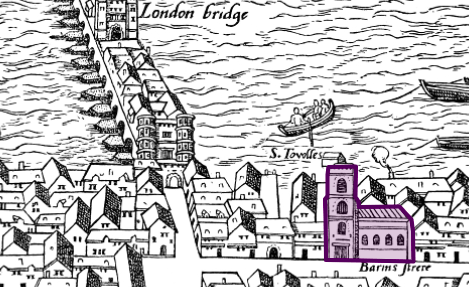
A déjà-vu-all-over-again case today. John Marten, a yeoman of London, ran into the church of St. Olave [Olaf] in Southwark at the end of January 1489. When the coroner came, he confessed murder. A few weeks before he’d been at Kilburn in Middlesex and hit William Alwen on the head with a longbill, penetrating toContinue reading “Abjuring? Stick to your route”
Sanctuary and impunity for crime

Many late medieval English people saw sanctuary as a bulwark against judicial corruption. Others saw it as corruption itself, allowing heinous criminals to escape consequences. This seeker was a great example of the latter. On 28 March 1490, a mariner of Brixham, Devon, John Preston alias Westlake, took sanctuary in the church in Bishop’s Sutton,Continue reading “Sanctuary and impunity for crime”
Crime and Credibility

This case features a serial horse-thief and serial sanctuary-taker with a wee bit of a credibility problem. In May 1489 John Whatman, a roper of Ticehurst, Sussex, stole a horse at Wadhurst, a few miles away. Then in September 1489 Whatman stole another horse, at Heathfield in Sussex. He was arrested for this second theftContinue reading “Crime and Credibility”
Cop killer, 1491
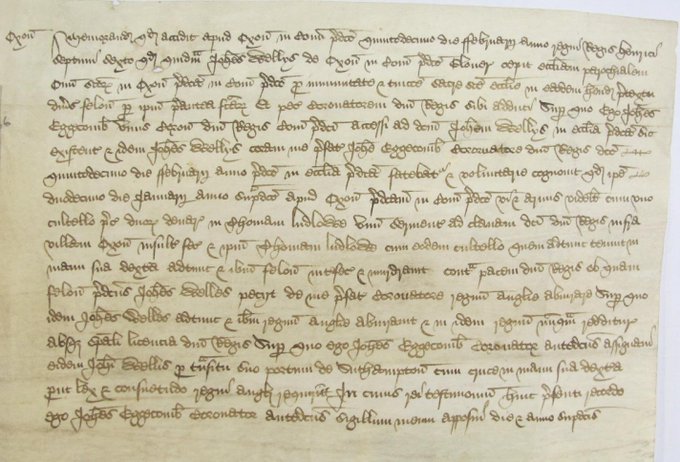
In mid-February 1491, John Wells, glover of Oxford, ran into the church of All Hallows. He confessed to the coroner that a month before he had killed a serjeant, whose job it was to arrest suspected felons. A draft of a petition to the king from the serjeant’s widow, Margery Ludlow, gives some backstory toContinue reading “Cop killer, 1491”
Abjuring from a chartered sanctuary

Though most who came to Durham cathedral for sanctuary requested time-unlimited asylum, it was still possible to request a coroner to abjure the realm rather than stay long-term in the cathedral precinct. In 1497, a man named Colson from Wolsingham, county Durham, had been arrested for theft and put in prison, but managed to escape.Continue reading “Abjuring from a chartered sanctuary”
The savvy criminal

George Sawyer alias Wolmer, a Surrey man variously identified as husbandman, yeoman, and sawyer, was a walking example of the escape hatches, legal and illegal, available to the savvy late medieval criminal. In 1499, Sawyer took sanctuary at St. Mary Overey in Southwark after a string of burglaries in Kent, but three men dragged himContinue reading “The savvy criminal”
Sanctuary in the Rye cemetery
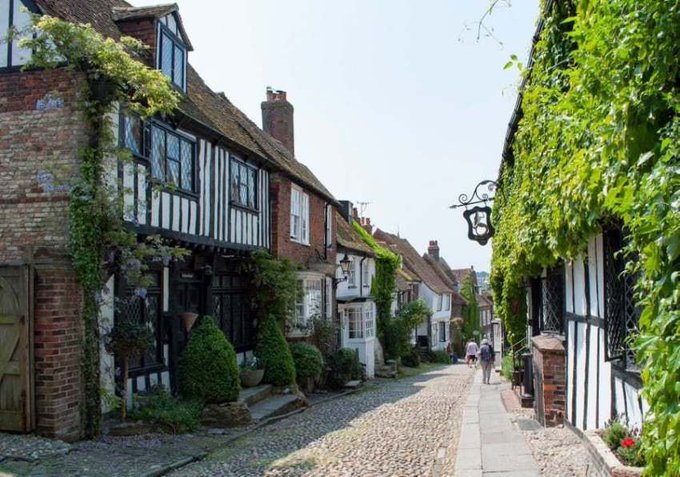
Though most of my cases of sanctuary seekers come from the records of the royal courts or sanctuary registers, a few examples turn up in town records, including one from Rye, Sussex, in 1500. On 24 October of that year John Purchase, noted to be thirty years old, took refuge in the cemetery of theContinue reading “Sanctuary in the Rye cemetery”
Murder, treason, and exile

An odd case weaving together an apparently ordinary homicide with the last throes of the 15th century dynastic wars – and suggesting that in some circumstances traitors who might foment rebellion abroad could not be allowed to abjure. In Dec 1501, Thomas Forest, tailor of Leominster, Herefordshire, took sanctuary far from home in Holy CrossContinue reading “Murder, treason, and exile”
The Hospitaller’s cloak

In 1506, two accused felons claimed sanctuary by touching the cloak of a Hospitaller knight rather than more conventionally running into a parish church or monastery. Richard Pulham (harpist from St Mary Hoo, Kent, indicted for homicide) and Ralph Toker (Somerset yeoman who’d previously abjured twice for multiple felonies but been caught in the realm)Continue reading “The Hospitaller’s cloak”
 Sanctuary Seekers in England, 1394-1557