
This case has a few complications, but has a number of features common to homicide indictments in the early Tudor period: a group of men set upon someone in what looks like an assassination; though the homicide took place in the London area those involved were from the Welsh marches and the victim had aContinue reading “A dead Welshman and aristocratic impunity”
Tag Archives: Execution by hanging
A Herefordshire murder

Thomas White, yeoman of Clehonger, Herefordshire, sought sanctuary in the church of All Hallows London Wall on 19 March 1486. He confessed to murder. White told the coroner that on 26 December 1482 he attacked John Corter, another yeoman of Clehonger, with a staff, killing him. White apparently got away with this for more thanContinue reading “A Herefordshire murder”
Crime and Credibility

This case features a serial horse-thief and serial sanctuary-taker with a wee bit of a credibility problem. In May 1489 John Whatman, a roper of Ticehurst, Sussex, stole a horse at Wadhurst, a few miles away. Then in September 1489 Whatman stole another horse, at Heathfield in Sussex. He was arrested for this second theftContinue reading “Crime and Credibility”
Burglary in London, 1491

On 5 October 1491, John Archer, a London baker, broke into the house of Margery Marsshe in the parish of St Clement in London, taking a mazer (a wooden drinking bowl) decorated with silver gilt. From London Archer apparently fled to the West Country, and eventually took sanctuary in the parish church at Nunney, Somerset.Continue reading “Burglary in London, 1491”
Get-out-of-jail-free card?

There were quite a few sanctuary breach cases 1500-10, suggesting that either local authorities were pushing the envelope on sanctuary, or felons were trying to use allegations of breach as a get-out-of-jail-sort-of-free card. Though some have seen these cases as part of a “judicial assault” on sanctuary, that’s not quite accurate. In cases coming toContinue reading “Get-out-of-jail-free card?”
Don’t mess with the Earl of Oxford

William Knok, yeoman of Faversham, was outlawed in Kent in 1503 after he failed to appear to answer an indictment for felony. He escaped detection for about three years, but then in May 1506 he was evidently rumbled. He ran into the Blackfriars church in London, but before he could abjure before a coroner heContinue reading “Don’t mess with the Earl of Oxford”
“The white hare should drive the white greyhound into the root of an oak”: Prophecies and mitigations

Thomas Cheselet was an operator who knew his way around mitigations – and a dab hand at treasonous prophecies. The tale starts in 1519 when Cheselet, a tailor of Mere, Wiltshire, took sanctuary at the Dominican priory at Fisherton Anger. He asked for the coroner, confessing to him that earlier that year he had stolenContinue reading ““The white hare should drive the white greyhound into the root of an oak”: Prophecies and mitigations”
State visits, royal largesse, and exclusions from mercy

In May 1522, Emperor Charles V visited England. State visits are always an opportunity to showcase the ruler’s brand both domestically and internationally, and the emperor’s stay in England prompted a lavish series of pageants and demonstrations of regal power. As the Emperor Charles and Henry VIII ceremonially processed through the streets on the southContinue reading “State visits, royal largesse, and exclusions from mercy”
Drinking at the Sanctuary Parlour

If you took sanctuary at St Martin le Grand in London, you had to be careful about the boundaries: in many places they were invisible lines running down the middle of a street or between buildings. One step over, and you could be arrested. In the 1520s Londoners disagreed about the sanctuary status of aContinue reading “Drinking at the Sanctuary Parlour”
The “degree of St Edith”: sanctuary at a nunnery
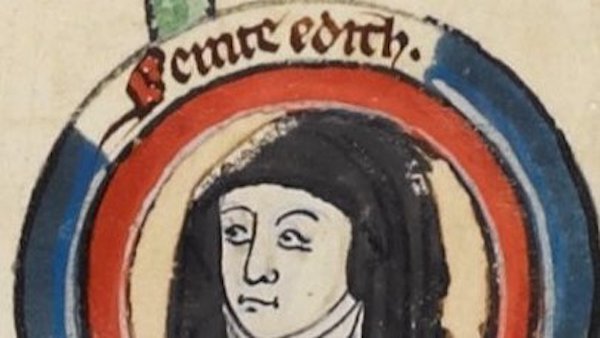
A curious aspect of sanctuary in 15th-16th century England is that though many different kinds of churches offered shelter, I’ve found only one case where a nunnery provided shelter to a fleeing felon. In 1529, Geoffrey Jenyns, a yeoman of Brentwood, Essex, was hauled into court in 1529 or 1530 to answer to a chargeContinue reading “The “degree of St Edith”: sanctuary at a nunnery”
 Sanctuary Seekers in England, 1394-1557