
This case has a few complications, but has a number of features common to homicide indictments in the early Tudor period: a group of men set upon someone in what looks like an assassination; though the homicide took place in the London area those involved were from the Welsh marches and the victim had aContinue reading “A dead Welshman and aristocratic impunity”
Tag Archives: Homicide
Lying in wait in London, 1486

In February 1486, a coroner’s inquest was convened over the body of John Lowthe of London, gentleman, found dead in the parish of St Nicholas Olave. The jurors reported to the coroner that Nicholas Wagstaff, a yeoman of London, had lain in wait to assault Lowthe. He stabbed him with a dagger and Lowthe died.Continue reading “Lying in wait in London, 1486”
A Herefordshire murder

Thomas White, yeoman of Clehonger, Herefordshire, sought sanctuary in the church of All Hallows London Wall on 19 March 1486. He confessed to murder. White told the coroner that on 26 December 1482 he attacked John Corter, another yeoman of Clehonger, with a staff, killing him. White apparently got away with this for more thanContinue reading “A Herefordshire murder”
Ringing the bells at Durham cathedral

Robert Lonysdale and Christopher Lyndesey of Dent (then Yorkshire, now Cumbria), arrived at Durham Cathedral in mid-July 1486, rang the bells, and sought sanctuary for a decade-old homicide. They told the cathedral’s registrar that in November 1476 or 1477 they had quarrelled with Laurence Falshed at the manor of Howgill in Dent. One or bothContinue reading “Ringing the bells at Durham cathedral”
A 1487 murder mystery

In late January 1487, John Cole the younger of Great Greenford, Middlesex, was found dead at nearby Norwood. A coroner’s inquest was convened. The inquest jurors declared that Cole had been killed by Richard Smyth, a “mealman” (seller of meal/flour). They also reported that immediately after Smyth ran to the parish church at Southall, takingContinue reading “A 1487 murder mystery”
A Suffolk mercer goes wild

On 20 August 1487, John Boole, mercer of Westhorpe, Suffolk, took sanctuary in his own parish church. He confessed robberies, thefts, and a murder. About eight months before, Boole and his partner in crime, John Herward, a tailor of Beltham, Essex, had robbed a man at Holkham Market in Norfolk, stealing cloth and various otherContinue reading “A Suffolk mercer goes wild”
A murder in Allendale

Another Durham case where something must have come up to prompt two brothers to run to sanctuary for a homicide they’d committed more than eighteen years before. In August 1488, Richard Hawden, a husbandman of Whickham, county Durham, sought sanctuary. He told the cathedral registrar that around 1470, he and his three brothers quarrelled withContinue reading “A murder in Allendale”
Ambiguities of sanctuary
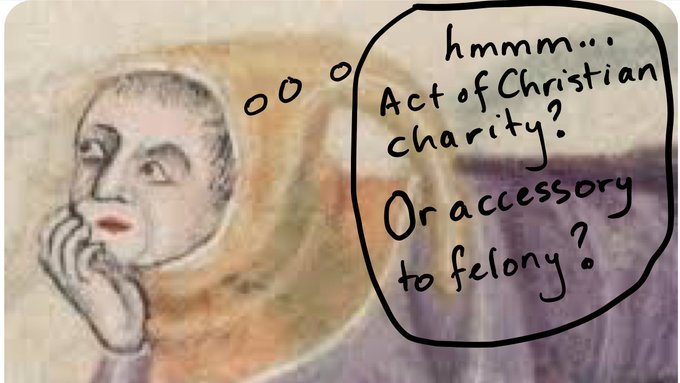
Another Durham case with interesting evidence about the ambiguities of sanctuary – how permissible was it to help a felon escape to asylum? Was it an act of Christian charity, or accessory to felony? In August 1484, John Hudson, a shoemaker of Ripon, came to Durham because a week before he and others had assaultedContinue reading “Ambiguities of sanctuary”
Abjuring? Stick to your route
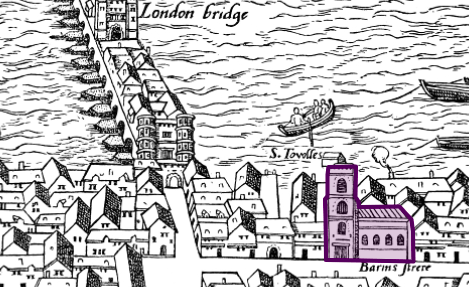
A déjà-vu-all-over-again case today. John Marten, a yeoman of London, ran into the church of St. Olave [Olaf] in Southwark at the end of January 1489. When the coroner came, he confessed murder. A few weeks before he’d been at Kilburn in Middlesex and hit William Alwen on the head with a longbill, penetrating toContinue reading “Abjuring? Stick to your route”
A quarrel amongst tanners

On a wintry day in February 1489 at Barking, Essex – let’s imagine it was raining, just above freezing, miserable – brothers William and Stephen Burre, two tanners, quarreled with another tanner, John Cursum. The Burre brothers were accused of slashing Cursum with a small knife, giving him a wound from which he died fourContinue reading “A quarrel amongst tanners”
 Sanctuary Seekers in England, 1394-1557