
Many late medieval English people saw sanctuary as a bulwark against judicial corruption. Others saw it as corruption itself, allowing heinous criminals to escape consequences. This seeker was a great example of the latter. On 28 March 1490, a mariner of Brixham, Devon, John Preston alias Westlake, took sanctuary in the church in Bishop’s Sutton,Continue reading “Sanctuary and impunity for crime”
Tag Archives: Homicide
Cattle theft and homicide
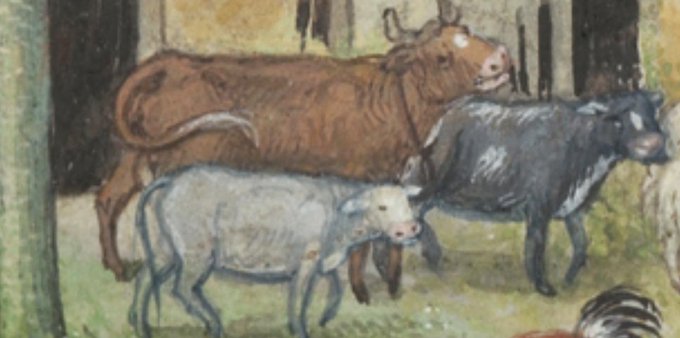
One April day in 1490, John Abrey of Wendlebury, Oxfordshire, was crossing the king’s road when he saw a husbandman named John Carteworth leading away three of his (Abrey’s) cows from the common field. Abrey tried to stop him and the quarrel became violent. Carteworth pierced Abrey’s head with a pitchfork, giving Abrey a headContinue reading “Cattle theft and homicide”
Cop killer, 1491
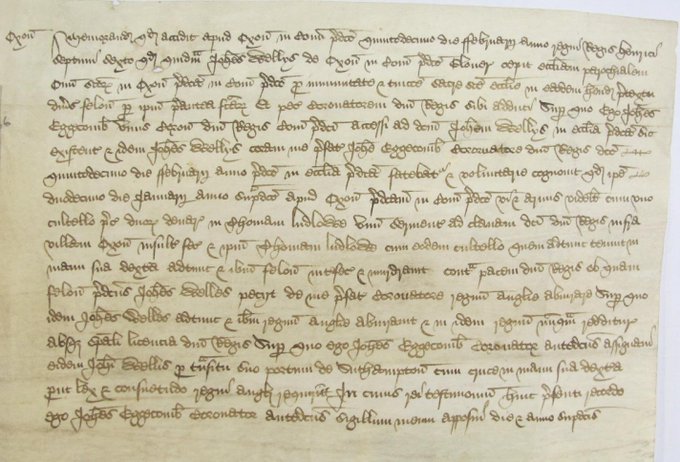
In mid-February 1491, John Wells, glover of Oxford, ran into the church of All Hallows. He confessed to the coroner that a month before he had killed a serjeant, whose job it was to arrest suspected felons. A draft of a petition to the king from the serjeant’s widow, Margery Ludlow, gives some backstory toContinue reading “Cop killer, 1491”
Toxic masculinity medieval-style

The Durham sanctuary register records that on 27 November 1491 John Joy of Amcotts, Lincs, sought asylum. As he explained, he’d been indicted for the murder of John Portyngton of Amcotts, but he wasn’t guilty. … Or, well, maybe he was a bit guilty: he hadn’t been present when other men had killed Portyngton, butContinue reading “Toxic masculinity medieval-style”
Pardoned decades later

A curious case featuring Westminster gentlemen who seems to have committed a series of attacks on foreigners (or strangers, as the contemporary term was) in 1491, one ending in death. First, in mid-September 1491, William Bartholomew, Westminster gentleman, together with John Bartholomew, also gentleman of Westminster (some relation, presumably) and William Chawcey, gentleman, attacked twoContinue reading “Pardoned decades later”
Prosecuting crime in the Durham palatinate
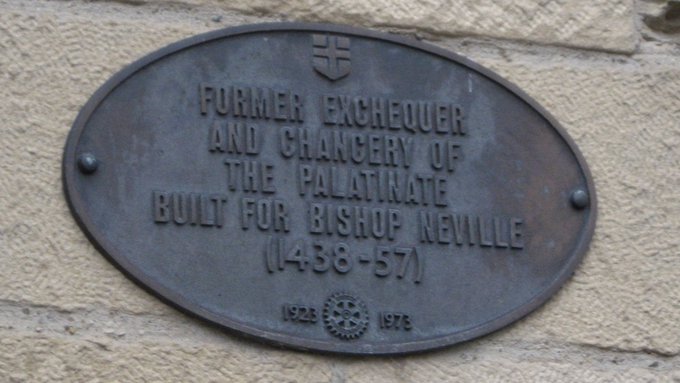
In 1492 Robert Atkynson of Nether Crosby, Cumbria, sought sanctuary because a month before he’d killed William Skoloke at Warwick Bridge. Atkynson’s garden-variety request for sanctuary had a couple of interesting diversions from the ordinary. His case hints at a relationship between the administration of the Durham sanctuary and the system of criminal prosecution inContinue reading “Prosecuting crime in the Durham palatinate”
Death and the Knitster in Knightrider Street

In 1492 a coroner’s inquest was held in Knightrider Street, London, over the body of Robert Scoley, plumber. Every time I read the name Knightrider St, I see David Hasselhoff …but I doubt there were muscle cars involved. Instead: knitting. Scoley the plumber had been peacefully minding his own business, the coroner’s inquest ruled, whenContinue reading “Death and the Knitster in Knightrider Street”
“The liberty of the town of Knowle”
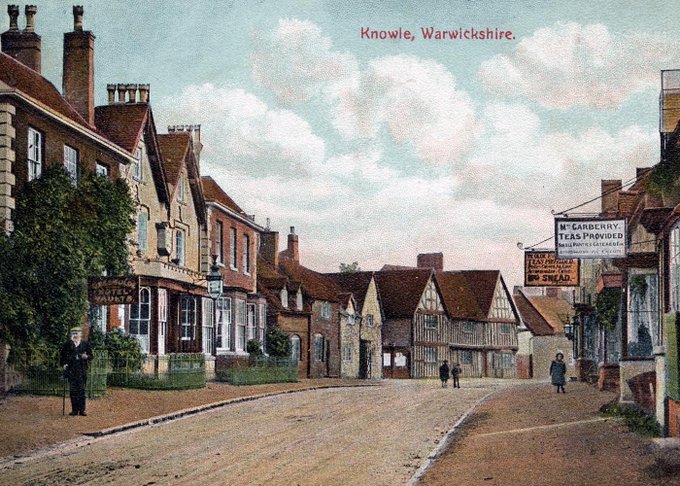
In 1492 John and Robert Tayllour, sons of husbandman Richard Tayllour of Little Inkberrow, Worcestershire, killed their neighbour Thomas Mershe with a “battestaff.” Afterward, they fled to “the privilege or liberty of the town of Knowle.” This is the earliest evidence as far as I know for the sanctuary town of Knowle, Warwickshire. A manorContinue reading ““The liberty of the town of Knowle””
Sanctuary at a deer park?

This is another case of a liberty, this time a royal one, claimed as a sanctuary. In 1493, coroner’s inquest jurors found that John Boteler, a bowyer of Lincoln, had stabbed and killed William Thomas. After the incident, the jurors reported, Boteler fled for the murder to “the franchise of Beaumontrent.” I’ve tentatively identified thisContinue reading “Sanctuary at a deer park?”
Struck by a Scottish axe

Betrayal from within the household in 15th century Newcastle: in August 1493, Robert Grene of South Shields was in Newcastle, “in a lane called the Close” (down by the Tyne), when Robert Nicholson attacked him. Nicholson, from Winlaton on the other side of Newcastle, had been part of Grene’s own household in South Shields untilContinue reading “Struck by a Scottish axe”
 Sanctuary Seekers in England, 1394-1557