
In 1496 a woman launched a “widow’s appeal”: that is, a private prosecution of homicide undertaken by the dead man’s wife against the accused murderer. This one has a sanctuary angle because the alleged murderer took shelter in a Hospitaller property. Margery Rollesley, widow of Humphrey Rollesley, accused William Toft, a tailor of Denby, Derbyshire,Continue reading “The Widow’s appeal of homicide”
Tag Archives: Homicide
Reasonable and unreasonable force

Two Yorkshire brothers—one a law-enforcement officer—fled to the sanctuary at Durham Cathedral when an arrest went wrong. Then, as now, the line between allowable and unreasonable force in arrests was controversial. In May 1495, Christopher Easby of Ripon took along his brother William when he went to arrest John Dixson for an unspecified offence. DixsonContinue reading “Reasonable and unreasonable force”
Murder in Staffordshire, 1496

On 27 April 1496 at Alrewas, Staffordshire, a coroner’s inquest was held over the body of John Hunt. Jurors reported that seven men–artisans of different trades in nearby Lichfield–had murdered him and then run to sanctuary. The seven men were a baker, a dyer, a draper, a fletcher, a tallowchandler, and two pewterers. According toContinue reading “Murder in Staffordshire, 1496”
Homicide and the Canons of Egglestone Abbey
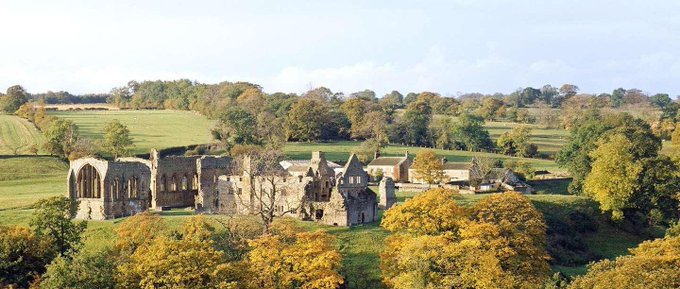
In 1496, three canons and a servant of a Premonstratensian Abbey in Yorkshire, Egglestone Abbey, took sanctuary at Durham after they had an altercation with Richard Appleby of Cotherstone and killed him. It’s not quite clear what was happening here, but it’s worthy of note that a number of Applebys of Cotherstone and region wereContinue reading “Homicide and the Canons of Egglestone Abbey”
Walking the boundaries: Bland, the St Martin’s sanctuary man

Though Perkin Warbeck’s stay at Beaulieu Abbey was short, some of his followers remained in sanctuaries long term, including well-known sanctuary men of St Martin le Grand (SMLG) in London. In the 1530s, Henry VIII mandated a royal enquiry into the boundaries of the SMLG precinct as part of a long-running dispute between the CityContinue reading “Walking the boundaries: Bland, the St Martin’s sanctuary man”
Murderer in the stocks

A funny little case from Lincolnshire in 1498. A coroner’s inquest over Thomas Straker of Swineshead found that John Hall and Richard May, labourers also of Swineshead, had assaulted and killed Straker. Both Hall and May fled from the scene with the people of Swineshead in hot pursuit. They caught May and put him “inContinue reading “Murderer in the stocks”
Sanctuary in the Rye cemetery
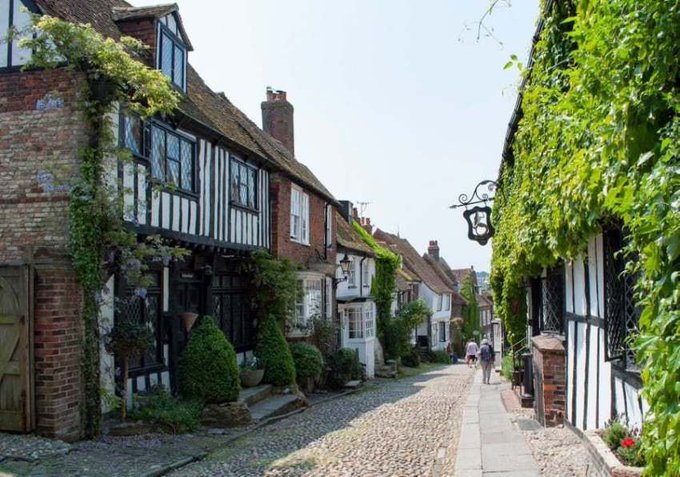
Though most of my cases of sanctuary seekers come from the records of the royal courts or sanctuary registers, a few examples turn up in town records, including one from Rye, Sussex, in 1500. On 24 October of that year John Purchase, noted to be thirty years old, took refuge in the cemetery of theContinue reading “Sanctuary in the Rye cemetery”
Chasing a runaway dog

William Thorpp of Welwick, Yorks, sought sanctuary at Durham cathedral in December 1500 because a month before he and several other men ended up killing a man when they went after their runaway dog in a park. Thorpp and his three companions were probably out hunting or poaching, as they had a dog (no nameContinue reading “Chasing a runaway dog”
Murder in the Savoy liberty
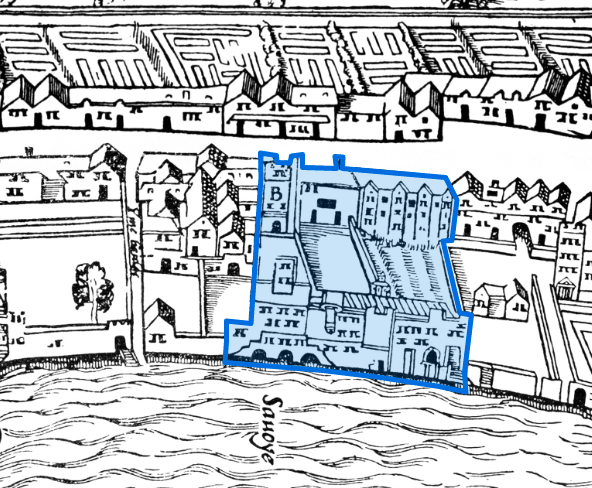
In 1501 the Middlesex coroner was summoned to the parish of St Mary le Strand to call an inquest over the body of Laurence Starke, who’d worked in the Savoy liberty prison, where the Savoy hotel is today. The Savoy liberty was an independent jurisdiction belonging to the duchy of Lancaster, which had been foldedContinue reading “Murder in the Savoy liberty”
Murder, treason, and exile

An odd case weaving together an apparently ordinary homicide with the last throes of the 15th century dynastic wars – and suggesting that in some circumstances traitors who might foment rebellion abroad could not be allowed to abjure. In Dec 1501, Thomas Forest, tailor of Leominster, Herefordshire, took sanctuary far from home in Holy CrossContinue reading “Murder, treason, and exile”
 Sanctuary Seekers in England, 1394-1557