
A rare woman sanctuary seeker, an alleged husband-murderer no less: in July 1503, a coroner’s inquest over the body of Richard Bery at Sevenoaks, Kent, ruled that he had been murdered by his wife Agnes. The jurors reported that Agnes had administered ratsbane (arsenic) to her husband in his food and drink (though nothing inContinue reading “Arsenic and old lace”
Tag Archives: Homicide
Feud in Teesdale

Eight men from villages in Teesdale – six of them with the surname Appleby – sought sanctuary at Durham Cathedral for two different homicides in 1505. This seems to have a spiralling feud of some sort; it may have had a prelude in 1496 involving canons from a Premonstratensian abbey. In March 1505 John, Thomas,Continue reading “Feud in Teesdale”
The Hospitaller’s cloak

In 1506, two accused felons claimed sanctuary by touching the cloak of a Hospitaller knight rather than more conventionally running into a parish church or monastery. Richard Pulham (harpist from St Mary Hoo, Kent, indicted for homicide) and Ralph Toker (Somerset yeoman who’d previously abjured twice for multiple felonies but been caught in the realm)Continue reading “The Hospitaller’s cloak”
Murder with a twist

An interesting twist and a frustrating lack of conclusion in this case: In 1505 an inquest was held over the body of Edward ap Evan ap Tidder – called “of London, yeoman,” but presumably originally from Wales. The inquest jurors reported that in the parish of St Bride, Fleet Street, between 10 and 11 atContinue reading “Murder with a twist”
Boat ride on the Thames

In May 1507 Robert Forde, husbandman of Brightwell manor in Berkshire, attacked chaplain John Scolfyld, stabbing him with a dagger. Scolfyld immediately died, and Forde ran to the priory at Wallingford. Wallingford priory was a small Benedictine house; it’s not clear how many monks it had, but it was amongst the smaller religious houses CardinalContinue reading “Boat ride on the Thames”
Finding a ship to go into exile

When a sanctuary seeker abjured the realm, they were sent to a port to go overseas. A weak link in the system was finding a ship captain willing to take the abjurer on board, as this seeker found. In July 1507, Simon Wigmore, a labourer of Winchester, took sanctuary at the parish church of HolyContinue reading “Finding a ship to go into exile”
Sexual violence and vigilante justice
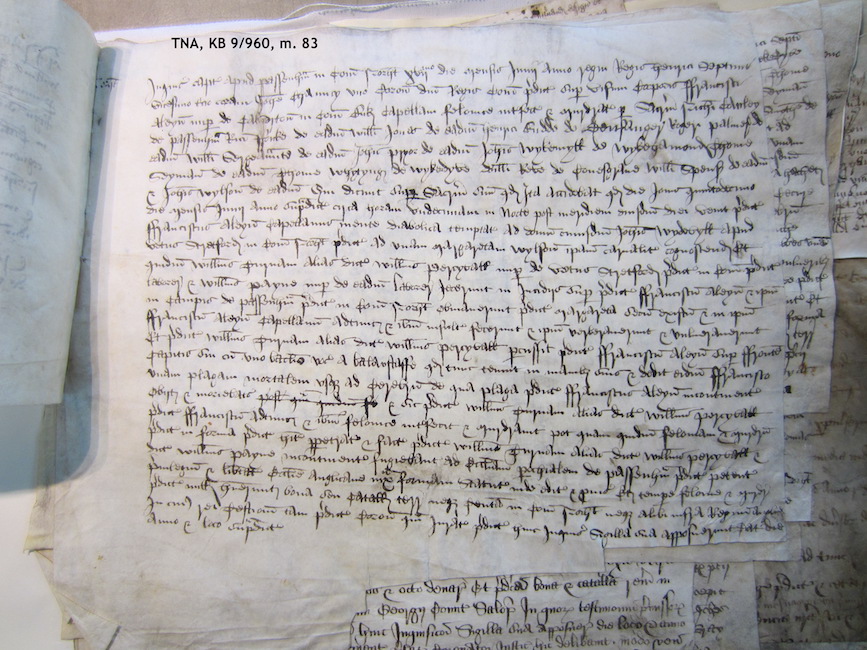
Late in Henry VII’s reign, sanctuary facilitated a victim’s vengeance on her rapist when the justice system itself would not likely have helped her. In 1508 jurors in Northamptonshire reported that Francis Aleyn, chaplain, “tempted by diabolical thoughts,” broke into John Wydevyll’s house at Old Stratford and raped Margaret Wylson. Following the assault, Wylson turnedContinue reading “Sexual violence and vigilante justice”
Child abduction and unmentionable crimes

In November 1510 a number of men abducted Richard Horsley from his mother’s house in Catton, Yorks, took him to a field, and gave him “several wounds from which blood flowed.” A month later Richard died from those wounds. The laconic records of his case suggest something horrific – even more horrific than the usualContinue reading “Child abduction and unmentionable crimes”
One Gye, or two?

There were two separate claims of sanctuary at Durham by men named Thomas Gye of Wistow, Yorkshire, in 1510 and 1511, one for homicide, the other for cattle theft. The same man? In October 1510 Thomas Gye came to Durham and confessed that earlier that month at Womersley, Yorks, he’d struck William Pynchebek in theContinue reading “One Gye, or two?”
Killing by “chance medley” in Hereford, 1511
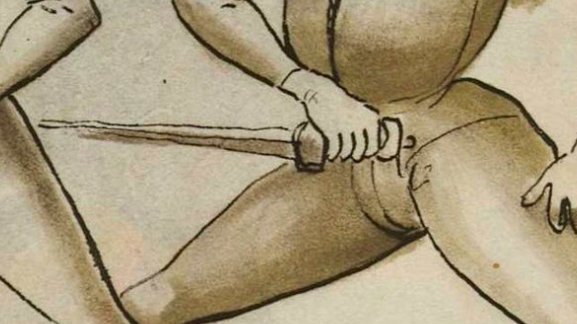
An inquest was convened over the body of gentleman Henry Baskirville of Hereford on 1 September 1511. Jurors held he’d been killed two days before in a knife fight with Roger Lloide, also gentleman of Hereford. The jurors used a term for the killing that was quite new then (earlier than the OED‘s first usage):Continue reading “Killing by “chance medley” in Hereford, 1511″
 Sanctuary Seekers in England, 1394-1557