
This case has a few complications, but has a number of features common to homicide indictments in the early Tudor period: a group of men set upon someone in what looks like an assassination; though the homicide took place in the London area those involved were from the Welsh marches and the victim had aContinue reading “A dead Welshman and aristocratic impunity”
Tag Archives: Westminster sanctuary
Highway robberies, escapes, and legal deals

Highway robbery episode: according to jurors in Berkshire, on two occasions in 1484 Thomas Pytfeld, an innholder of Reading, robbed men on the roads around Maidenhead. On the first occasion, in July, he allegedly attacked Walter Sambourne and stole his grey gelding. The second time in October he assaulted Geoffrey Gwyn, the vicar of HurleyContinue reading “Highway robberies, escapes, and legal deals”
A quarrel amongst tanners

On a wintry day in February 1489 at Barking, Essex – let’s imagine it was raining, just above freezing, miserable – brothers William and Stephen Burre, two tanners, quarreled with another tanner, John Cursum. The Burre brothers were accused of slashing Cursum with a small knife, giving him a wound from which he died fourContinue reading “A quarrel amongst tanners”
“The liberty of the town of Knowle”
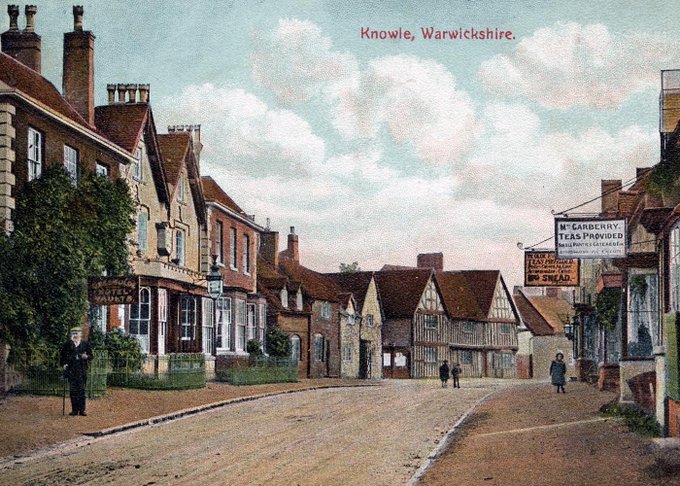
In 1492 John and Robert Tayllour, sons of husbandman Richard Tayllour of Little Inkberrow, Worcestershire, killed their neighbour Thomas Mershe with a “battestaff.” Afterward, they fled to “the privilege or liberty of the town of Knowle.” This is the earliest evidence as far as I know for the sanctuary town of Knowle, Warwickshire. A manorContinue reading ““The liberty of the town of Knowle””
Richard Arnold, sanctuary-seeker

London haberdasher Richard Arnold is most famous for his commonplace book, where he recorded a bunch of random and fascinating things, including (as this 19th century edition headlined) the ballad “The Nutbrown Maid.” He also took sanctuary at one point for debt. Amongst the entries in his book, Arnold includes (pp 123-4) a draft ofContinue reading “Richard Arnold, sanctuary-seeker”
Three sanctuary breaches

The last years of Henry VII’s reign (he died in 1509) are often seen as rife with judicial corruption. That might not be completely fair, but there were lots of cases with odd outcomes in these years. Three sanctuary breach cases ended up in King’s Bench on the same day in 1508. The first involvedContinue reading “Three sanctuary breaches”
The Stavertons, long-term Westminster sanctuary dwellers
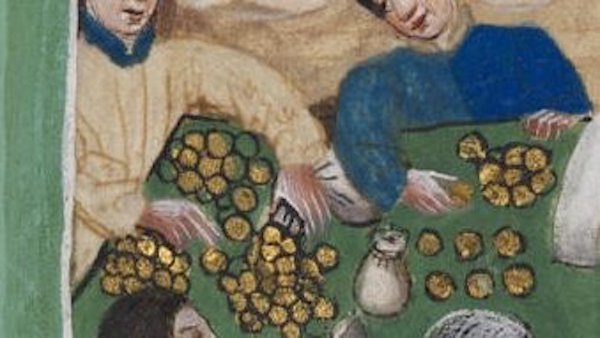
Most of the sanctuary seekers I’ve been featuring have been felons and traitors, but through the early 16th century debtors continued to seek sanctuary, too. One example is William Staverton, a London grocer. Kit French has written an article about William’s wife Katherine Staverton, the source of much of what I say below! Staverton tookContinue reading “The Stavertons, long-term Westminster sanctuary dwellers”
The “Blessed” Adrian Fortescue, violent thug and sanctuary seeker

Sir Adrian Fortescue was amongst a number of aristocrats in Henry VIII’s reign who took advantage of sanctuary to get out of sticky situations. This is one episode in a lifetime of falling in and out of trouble, balanced several centuries later, perhaps, by a (rather questionable) beatification as a Catholic martyr. At 17 Fortescue’sContinue reading “The “Blessed” Adrian Fortescue, violent thug and sanctuary seeker”
Sanctuary and the Hunne affair
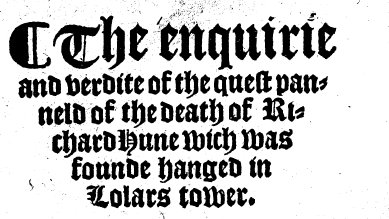
One of the most notorious English scandals of the mid-1510s was the death in custody of Richard Hunne, a London merchant tailor in battle with his parish priest. One of the men accused in his death fled to sanctuary. Hunne’s quarrel with his parish priest involved a customary fee for the burial of one ofContinue reading “Sanctuary and the Hunne affair”
Death of a stranger

In October 1518 a coroner’s inquest was called in St Clement Danes parish, just west of the City of London, over the body of one Anthony Niger alias Liegard. Niger’s name suggests he was likely a stranger, the term used then for foreigners: perhaps Dutch? The coroner’s inquest jurors found that Niger had died fromContinue reading “Death of a stranger”
 Sanctuary Seekers in England, 1394-1557