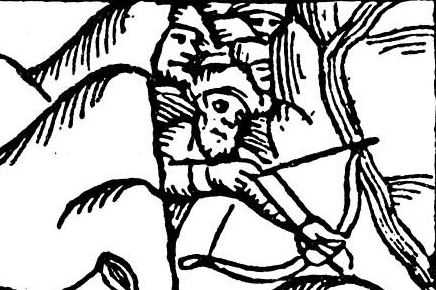
In September 1532, George ap Mathewe Gogh, along with 9 other men, murdered one Roger Lloyd at Welshpool in the Welsh marches. A few months later he sought sanctuary at Westminster. When the census of those privileged of the sanctuary was taken on 1 June 1533, he was listed (“George a Mata Gowghe”) as havingContinue reading “Murder in the Welsh marches”
Tag Archives: Westminster sanctuary
A serjeant of the mace slain

On 4 March 1533, John Ode alias Wode, serjeant of the mace (one of the London sheriffs’ officers) had an altercation with George Cornwall, a young Hereford gentleman known for his unruly life. Though the records don’t say so, it seems quite likely that their quarrel had something to do with Ode’s job, which includedContinue reading “A serjeant of the mace slain”
Murder on the Thames: John and Alice Wolfe

In mid-July 1533, Cologne merchant and gunpowder-maker John Wolfe and his wife Alice Wolfe led a group of co-conspirators in the heinous murder of two Italian merchants on a boat in the Thames. The home base for their elaborate plot was the sanctuary precinct at Westminster: John Wolfe was registered there as a debtor andContinue reading “Murder on the Thames: John and Alice Wolfe”
The Cappadocian gunner

In 1534 a gunner and gunpowder maker from Cappadocia in the Ottoman Empire got into a quarrel with a beer brewer, himself probably also an immigrant to England. The brewer ended up dead. The gunner’s name was hard to render into English, so he was listed by a number of aliases in the indictment: LucasContinue reading “The Cappadocian gunner”
A pesky bit of youthful murder
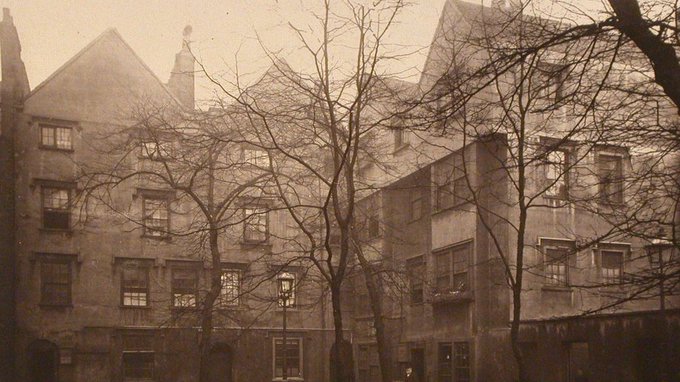
One October afternoon in 1534, two lawyers fell into a quarrel. Both were at Barnard’s Inn (one of the “law inns,” where common lawyers received their training), and they may have been students. John Margettes, an Irishman, mortally wounded John Yaxley, stabbing him in the stomach. Margettes immediately fled to Westminster Abbey. This allowed himContinue reading “A pesky bit of youthful murder”
The death of Geoffrey Jones, member of the king’s household
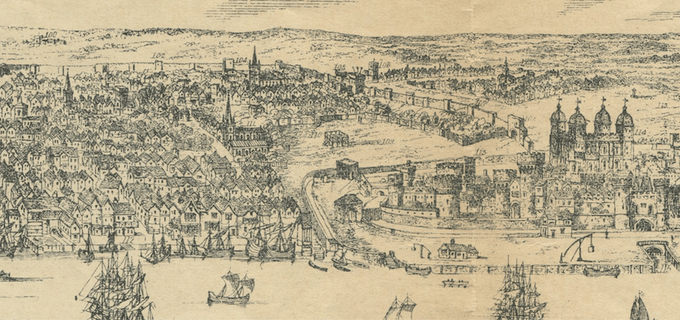
Aristocratic retainers and servants weren’t part of the civic political community in London, but they often lived there, certainly walked its streets, and killed one another there from time to time. On 7 March 1536 around 8pm, Geoffrey Jones, yeoman, was found dead in Tower Street on the east side of the City of London.Continue reading “The death of Geoffrey Jones, member of the king’s household”
Gentry feuds, highway robbery, mistaken identity

In 1537, yeoman Thomas Foteman was among thirty-one men accused in the death of William Jackson in Gloucestershire. Foteman was a retainer of Sir John Brydges, later 1st Baron Chandos, career soldier and man of “intense personality,” as his ODNB biographer put it. Brydges was evidently feuding with another aristocrat, Sir John Huddleston, who’d hadContinue reading “Gentry feuds, highway robbery, mistaken identity”
William Webbe and his wench

In September 1537 a rumour circulating through the Westminster sanctuary touching the king’s honour came to Thomas Cromwell’s ears. It was a scurrilous and maybe even treasonous piece of gossip that spread around the sanctuary men at Westminster, about the keeper of the sanctuary, the keeper’s “wench,” and the king. Cromwell established an informal enquiryContinue reading “William Webbe and his wench”
Flight of an apprentice
In 1538 London apprentice Michael Crowche ran to Westminster sanctuary for fear of his master’s “crueltie of imprisonment.” As he put it, he “did flee and took the sanctuary of Westminster …for the safeguard of his body, until such time as that [he] might avoid the cruelty and extremity of the wilfulness & malice ofContinue reading “Flight of an apprentice”
Death of a Spanish merchant
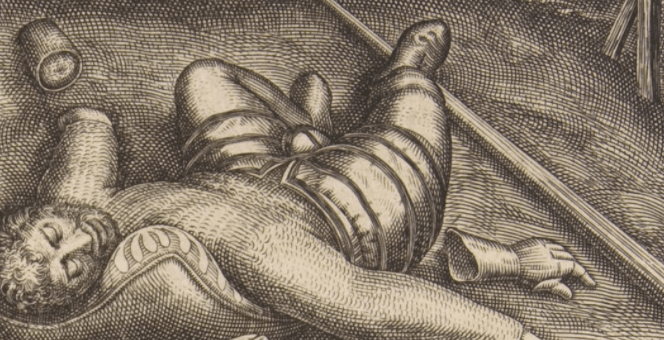
On 15 July 1539, a Spanish merchant named John de Ordonna was found dead in the courtyard of another Spanish merchant, Fernando de Verdesey, in London. A coroner’s inquest was convened to investigate the cause of his death. The inquest jurors determined that Ordonna had been killed by the servant of Alvarowe de Astudelio, anotherContinue reading “Death of a Spanish merchant”
 Sanctuary Seekers in England, 1394-1557