
A 1526 coroner’s inquest jury reported that Stafford dyer John Ithel had been minding his own business in the suburb of Forebridge when tinker Gilbert Hethe attacked him. Ithell struck back (the jurors said) in self-defence. Immediately after their encounter, as Hethe hung between life and death from the wound Ithell had inflicted on him,Continue reading “Death of a tinker”
Author Archives: shannonmcsheffrey
Mistress Chauncy

This is another of those rare women who sought sanctuary – this time a really rare bird, a married woman who sought sanctuary for debt without her husband. In 1536, Gerard Chauncy, stockfishmonger of London and “yeoman of the King’s Chamber and waiter in the Tower of London,” wrote a petition to the Chancellor toContinue reading “Mistress Chauncy”
Seizing William Gilbank

Sometimes men of power really wanted a felon who’d fled to sanctuary – but seizing them from a church was a serious sacrilege. A 1526 letter to Cardinal Wolsey gives rare insight into the calculations in such a situation. In August 1526, felon William Gilbank took sanctuary at the house of the Crouched or CrutchedContinue reading “Seizing William Gilbank”
The tragedy of the Watsons: domestic violence and corruption in London, 1527

In February 1527 London brewer John Watson stabbed his pregnant wife Isabel in a quarrel. When she fell apparently lifeless to the floor, he first tried to hang himself but failed, then ran to Westminster sanctuary. In the months that followed, Isabel languished between life and death while her husband and her brother-in-law tussled overContinue reading “The tragedy of the Watsons: domestic violence and corruption in London, 1527”
Sir Banger

In 1527 yeoman John Mathew assaulted and killed “a certain priest vulgarly called Sir Banger.” Yes, the whole point of this post is to point out that a 16th-c priest was nicknamed Sir Banger. Mathew revealed this homicide when he took sanctuary later that year at a London church, All Saints Bread Street. He alsoContinue reading “Sir Banger”
Drinking at the Sanctuary Parlour

If you took sanctuary at St Martin le Grand in London, you had to be careful about the boundaries: in many places they were invisible lines running down the middle of a street or between buildings. One step over, and you could be arrested. In the 1520s Londoners disagreed about the sanctuary status of aContinue reading “Drinking at the Sanctuary Parlour”
Cop takes sanctuary, London 1528

The London civic government and especially its sheriffs were hostile and aggressive towords felons who avoided arrest by running to sanctuary. So it was pretty embarrassing in 1528 when one of the sheriff’s staff had to flee to St Martin le Grand. On 16 April 1528, sheriff’s servant Robert Panke was in the Rose tavernContinue reading “Cop takes sanctuary, London 1528”
Accusations and reversals

When an accused criminal was indicted in an English court, the indictment reads as established fact, an account of something that actually happened. We need to exercise skepticism, though: it was not always so. In 1529, a London tailor named Henry Hawes was found dead in the parish of St Boltulph Aldersgate and a coroner’sContinue reading “Accusations and reversals”
The Happy Hour murders

London vintner John Parkyns had a tavern in St Michael Queenhithe parish, near the river. One day in March 1530, Parkyns had a run-in with two of the sheriff’s sergeants and both sergeants ended up dead. Though sometimes in the case of a double homicide the coroner held one inquest and wrote one report, inContinue reading “The Happy Hour murders”
The “degree of St Edith”: sanctuary at a nunnery
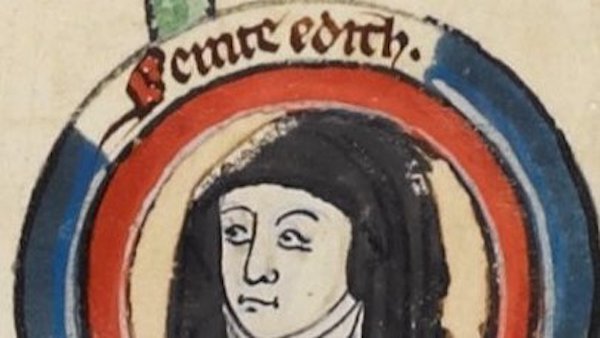
A curious aspect of sanctuary in 15th-16th century England is that though many different kinds of churches offered shelter, I’ve found only one case where a nunnery provided shelter to a fleeing felon. In 1529, Geoffrey Jenyns, a yeoman of Brentwood, Essex, was hauled into court in 1529 or 1530 to answer to a chargeContinue reading “The “degree of St Edith”: sanctuary at a nunnery”
 Sanctuary Seekers in England, 1394-1557