
On 14 May 1418, a husbandman of Aswardby, Lincolnshire, Thomas Laddesnam, was arrested for theft by the local constable, who then handed him over to Andrew Fetys of Pinchbeck, bailiff for the area. Fetys’s job was to convey Laddesnam the 30 miles from Aswardby to Lincoln castle to await trial. But Laddesnam escaped Fetys’s custodyContinue reading “Overstaying your welcome”
Tag Archives: Taking church without abjuring
The multiple mitigation man

Some medieval felons used every escape hatch — also known as mitigations — available to them. Often they started with sanctuary. In a 1423 case, the sanctuary seeker moved on to grassing up his mates before claiming the benefit of clergy. Third time was the charm. In April 1423, John Digelot, a yeoman of HolmburyContinue reading “The multiple mitigation man”
Angry townspeople vs. cathedral clergy
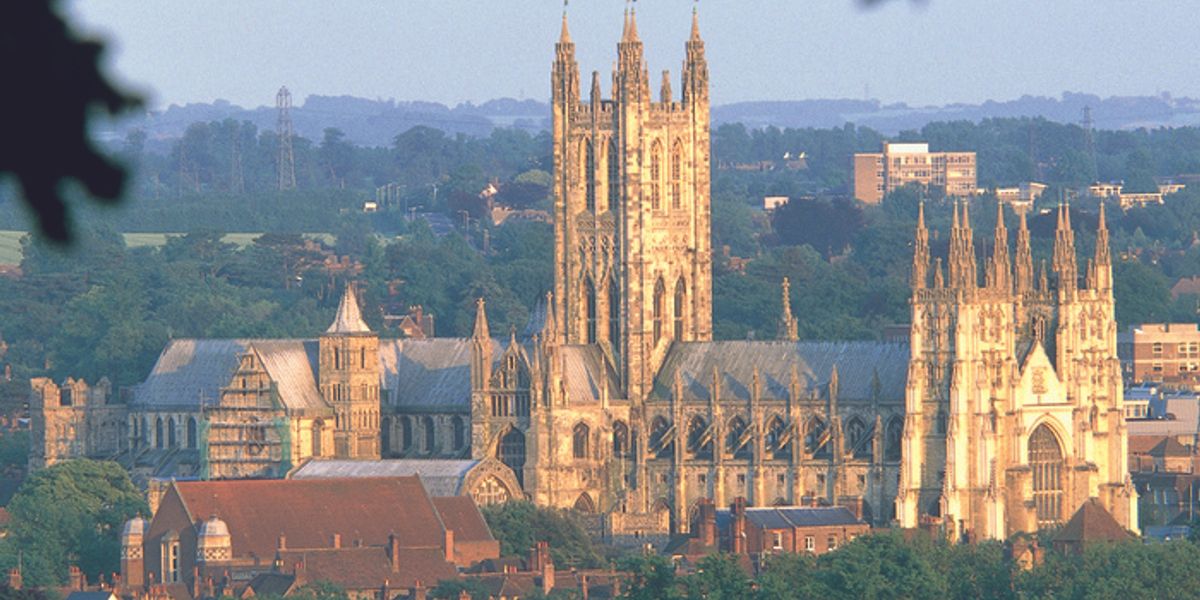
In 1425, the bailiffs and citizens of Canterbury drew up a list of complaints against the prior of Canterbury cathedral; one grievance was that the prior refused to hand over to them a goldsmith “from across the seas” named Bernard Oswyck, who had taken sanctuary in the priory precinct. The early historian of English sanctuaryContinue reading “Angry townspeople vs. cathedral clergy”
Conspiracy to murder in Gloucester

On 4 November 1426, one Thomas Brugge was attacked and killed at Gloucester. The coroner’s inquest jury reported that Richard Arleston, also of Gloucester, servant, had committed the murder, and that Arleston’s master, John Rede of Gloucester, brewer and constable of the town, along with five of Rede’s other servants, were accessories to murder. TheContinue reading “Conspiracy to murder in Gloucester”
A robber’s miscalculation

On 18 May 1428, John Ledbury, a London joiner, took sanctuary in the church of St. Andrew Undershaft. He confessed to the coroner that together with William Scardeburgh he had robbed a man on the road to Edgware, telling the victim that he was the constable of Edgware and demanding that he hand over hisContinue reading “A robber’s miscalculation”
The curious case of the Welsh knight

Another felony-inventor, this time a curious case of a Welsh knight who took sanctuary for an already-pardoned killing. His chequered career – including dabbling in Lollard revolts – suggests he was quite a guy. In London in 1431, Sir Nicholas Conway “of Caernarfon in parts of Wales,” recently returned from the war in France, killedContinue reading “The curious case of the Welsh knight”
What was he thinking?

Here’s an odd case. Richard Wode, mercer of Worcester, took sanctuary at St. Mary’s in Newington, Surrey, in 1460. He confessed to the coroner that he had stolen a horse from Angelo Spynell, merchant of Genoa, at Southampton. The coroner asked if he wanted to abjure the realm, but Wode said he would instead stayContinue reading “What was he thinking?”
Overstaying 40-day sanctuary
There were established rules for what to do if a sanctuary seeker refused to abjure and leave sanctuary in a parish church after 40 days, but not everyone who dealt with such cases knew those rules – or wanted to follow them. So it was with Thomas White, who took sanctuary at St. Mary IncombustaContinue reading “Overstaying 40-day sanctuary”
Sanctuary for sexual assault

On 12 March 1467, John Beauchamp of Lympstone, Devon, took sanctuary at St. Paul’s cathedral in London because eight years before he had assaulted, raped, and “deflowered” singlewoman Alice Perow with a knife. By the way, although in some circumstances in the 15th century (as Ruth Mazo Karras has shown), “singlewoman” came to be usedContinue reading “Sanctuary for sexual assault”
A London goldsmith in trouble
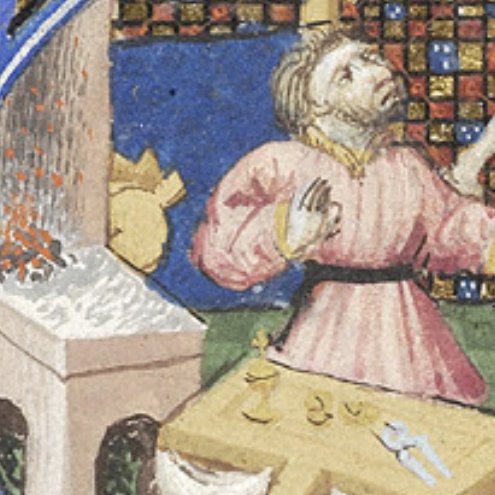
Robert Myndrym, a London goldsmith, had numerous problems from the mid-1480s into the early 1490s, and found two different recourses to sanctuary helpful. The first time around 1485 he went to Westminster for debt. As his wife Margery explained in a Chancery petition, she went to visit him “as a true wife ought to doContinue reading “A London goldsmith in trouble”
 Sanctuary Seekers in England, 1394-1557